

How to Find the Best Personal Injury Lawyer in Columbia, South Carolina
If you have been hurt in an accident in Columbia, South Carolina, choosing the right personal injury attorney is one of the most consequential decisions you will make. The legal landscape across the Midlands is competitive, and the quality of representation you secure can dramatically affect your compensation. This ultimate guide walks you through every step—from understanding South Carolina-specific laws to vetting credentials—so you can hire a lawyer with confidence.
Why Choosing the Right Columbia Injury Attorney Matters
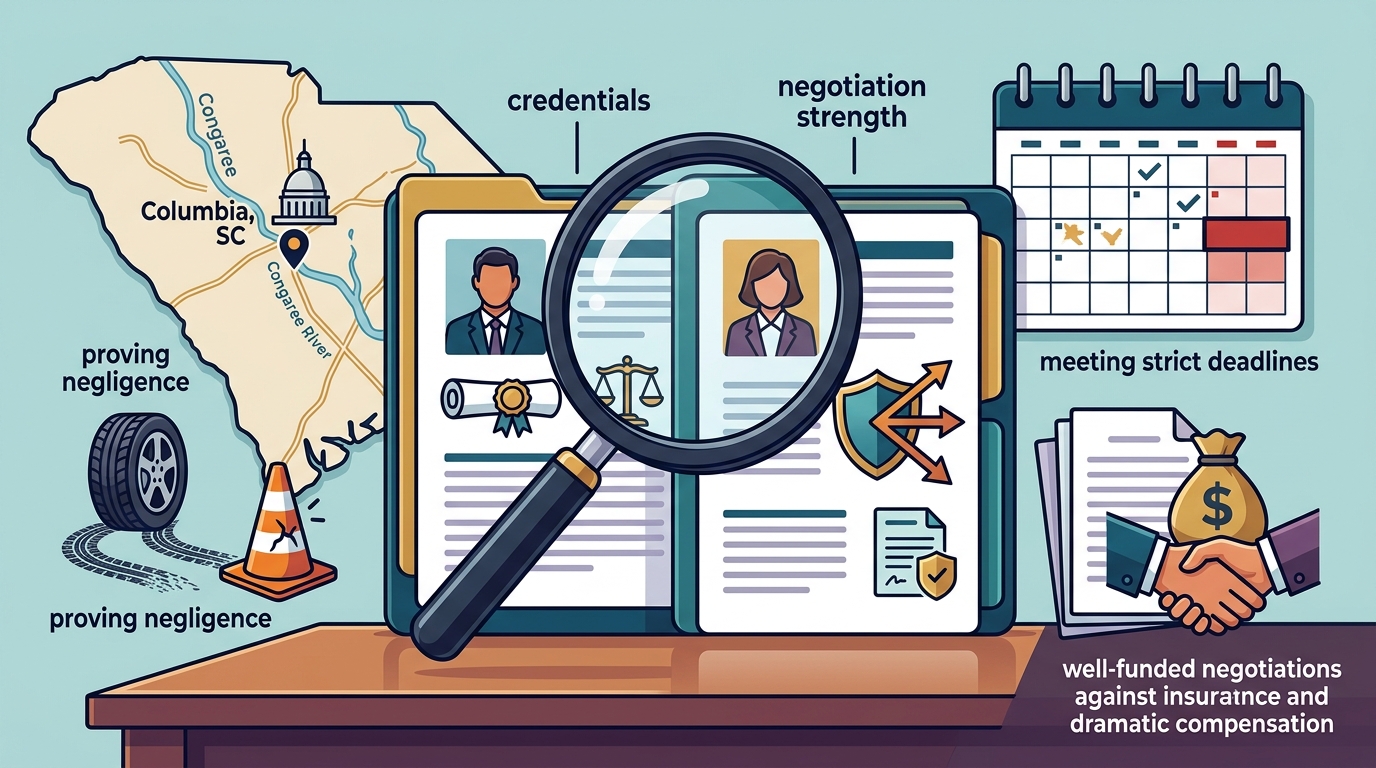
Personal injury cases hinge on proving negligence, meeting strict deadlines, and negotiating against well-funded insurance adjusters. A skilled Columbia attorney will know how to investigate your accident scene, preserve evidence before it disappears, and build a persuasive demand package. Selecting the wrong lawyer, on the other hand, can leave money on the table or jeopardize your claim entirely.
Understand the South Carolina Laws That Shape Your Case
Statute of Limitations
Time is not on your side. Under South Carolina law, you generally have three years from the date of your injury to file a personal injury lawsuit. If you miss this window, you will almost certainly lose your right to compensation. Claims against government entities carry an even tighter two-year deadline under the South Carolina Tort Claims Act.
In some situations the discovery rule applies, meaning the clock starts when you knew or reasonably should have known about your injury rather than the date the harm actually occurred. Medical malpractice cases follow a similar three-year rule but include a six-year statute of repose measured from the date of the malpractice itself.
Modified Comparative Negligence
South Carolina follows a modified comparative negligence system. You can still recover damages even if you bear partial responsibility for the accident—provided your fault is less than 51 percent. Your award is reduced by your percentage of blame, which is why a strong liability argument matters so much.
Damages Caps
There is no general cap on damages in most personal injury cases in South Carolina. However, noneconomic damages are capped in medical malpractice cases. For 2026, those caps are set at $596,001 for a single provider and $1,788,002 in the aggregate across all providers.
Seven Steps to Finding the Best Personal Injury Lawyer in Columbia
Step 1: Identify Lawyers Who Focus Exclusively on Personal Injury
General practitioners spread their attention across dozens of practice areas. You want a firm whose core business is representing injured plaintiffs—not defendants, corporations, or insurance companies. Columbia is home to numerous dedicated injury practices that handle car accidents, truck wrecks, slip and falls, medical malpractice, workers' compensation claims, wrongful death, and nursing home abuse cases.
Step 2: Verify Licensing and Peer Recognition
Every attorney you consider must be licensed by the South Carolina Bar. Beyond basic licensing, peer-recognition designations add an extra layer of credibility. Programs like Super Lawyers use a research-driven, peer-influenced selection process that recognizes the top five percent of attorneys in the state. Being listed is not a guarantee of results, but it does signal professional achievement and respect within the legal community.
Step 3: Evaluate Trial Experience—Not Just Settlement Numbers
Many firms advertise large settlement totals, but the real question is whether the attorney is willing and able to take your case to trial. Insurance companies pay closer attention when they know opposing counsel has courtroom experience. Ask any prospective lawyer how many personal injury cases they have tried to verdict in Richland County courts in the last five years.
Step 4: Read Verified Client Reviews
Online reviews on platforms such as Google, Yelp, and Avvo offer a window into the client experience. Look for patterns rather than isolated comments. Do reviewers mention clear communication, compassion, and follow-through? Are there complaints about being handed off to paralegals with no attorney oversight? A consistently strong review profile—especially one verified on multiple platforms—is a reliable indicator of quality.
Step 5: Ask About the Fee Structure
Most Columbia personal injury attorneys work on a contingency fee basis, meaning they only collect a fee if they win your case. Expenses are typically deducted from the overall recovery on your behalf. During your initial consultation, ask exactly what percentage the firm takes, whether litigation costs are separate, and what happens to those costs if you lose. Reputable firms will answer these questions transparently.
Step 6: Schedule Multiple Free Consultations
Nearly every reputable injury firm in Columbia offers a free, no-obligation initial consultation. Use this meeting to assess chemistry, communication style, and strategic thinking. Bring your medical records, the police report, photos from the scene, and any correspondence with insurance adjusters. A good attorney will listen carefully, outline your options honestly, and give you a realistic assessment of your case value.
Step 7: Confirm the Lawyer Will Handle Your Case Personally
Some high-volume firms assign cases to junior associates or contract lawyers shortly after signing. During your consultation, ask the attorney directly: "Will you personally be the lead on my case?" Make sure you know who your day-to-day contact will be, how often you will receive updates, and how strategic decisions are made.
Common Types of Personal Injury Cases in Columbia, SC
- Car accidents — the leading cause of personal injury claims in South Carolina, often resulting from distracted driving, speeding, or impaired driving.
- Truck and 18-wheeler collisions — involving complex federal regulations, multiple liable parties, and catastrophic injuries due to the size of commercial vehicles.
- Motorcycle crashes — riders face a disproportionate risk of severe injuries because of limited protective equipment.
- Slip and fall accidents — property owners may be liable when dangerous conditions are left unaddressed.
- Medical malpractice — surgical mistakes, misdiagnoses, and medication errors with life-altering consequences.
- Workers' compensation — injured workers must report within 90 days and file a claim within two years.
- Wrongful death — the same three-year statute of limitations applies, running from the date of the victim's death.
- Nursing home abuse — physical harm, emotional abuse, neglect, and financial exploitation of vulnerable residents.
Red Flags to Watch For
- Guaranteed outcomes: No ethical lawyer can promise a specific dollar amount before reviewing the facts.
- Pressure to sign immediately: A trustworthy attorney gives you time to think and compare options.
- No trial experience: Firms that always settle may leave compensation on the table.
- Poor communication during the consultation: If they are hard to reach before you hire them, it will only get worse afterward.
- Unclear fee agreements: Every cost should be spelled out in a written retainer agreement before you sign.
Key Takeaways
- South Carolina's three-year statute of limitations is a hard deadline—missing it can permanently bar your claim.
- The state's modified comparative negligence rule means you can still recover compensation if you are less than 51 percent at fault.
- Most Columbia personal injury lawyers work on contingency, so cost should not be a barrier to seeking legal help.
- Peer-recognition programs, trial track records, and verified client reviews are the most reliable signals of attorney quality.
- Always schedule multiple free consultations before committing to a firm.
Frequently Asked Questions
How long do I have to file a personal injury lawsuit in Columbia, South Carolina?
Under S.C. Code § 15-3-530(5), you generally have three years from the date of your injury to file. Claims against government entities must be filed within two years under the South Carolina Tort Claims Act. Special rules may extend or shorten the deadline for minors, individuals with mental incapacity, and medical malpractice cases.
Do personal injury lawyers in Columbia, SC charge upfront fees?
The vast majority of Columbia personal injury firms operate on a contingency fee basis. They do not bill by the hour or require large upfront payments. Instead, the attorney receives a percentage of any settlement or court award. If the case is unsuccessful, you typically owe no attorney fees.
What is modified comparative negligence in South Carolina?
South Carolina uses a modified comparative negligence system. You may recover damages even if you share some fault for the accident, as long as your responsibility is less than 51 percent. Your total recovery is reduced by your percentage of fault—making a compelling liability argument critical to maximizing your award.
What types of cases do Columbia personal injury lawyers handle?
Columbia injury attorneys commonly represent clients in car accidents, commercial truck wrecks, motorcycle crashes, slip and falls, medical malpractice suits, workers' compensation claims, wrongful death actions, nursing home abuse cases, and dog bite incidents.
How do I know if a Columbia personal injury lawyer is qualified?
Start by confirming the attorney is licensed with the South Carolina Bar. Look for peer-recognition honors such as Super Lawyers, which selects the top five percent of attorneys through a research-driven process. Read verified reviews on Google and Yelp, and ask about courtroom experience—specifically how many cases the attorney has tried to verdict in local courts.
Take the Next Step
Finding the best personal injury lawyer in Columbia, South Carolina, does not have to be overwhelming. Focus on attorneys who concentrate on injury law, demonstrate real trial experience, communicate openly about fees, and treat you with respect from the very first conversation. If you or a loved one has been injured, contact a qualified Columbia personal injury attorney today for a free consultation—your recovery and your rights depend on it.
"}