

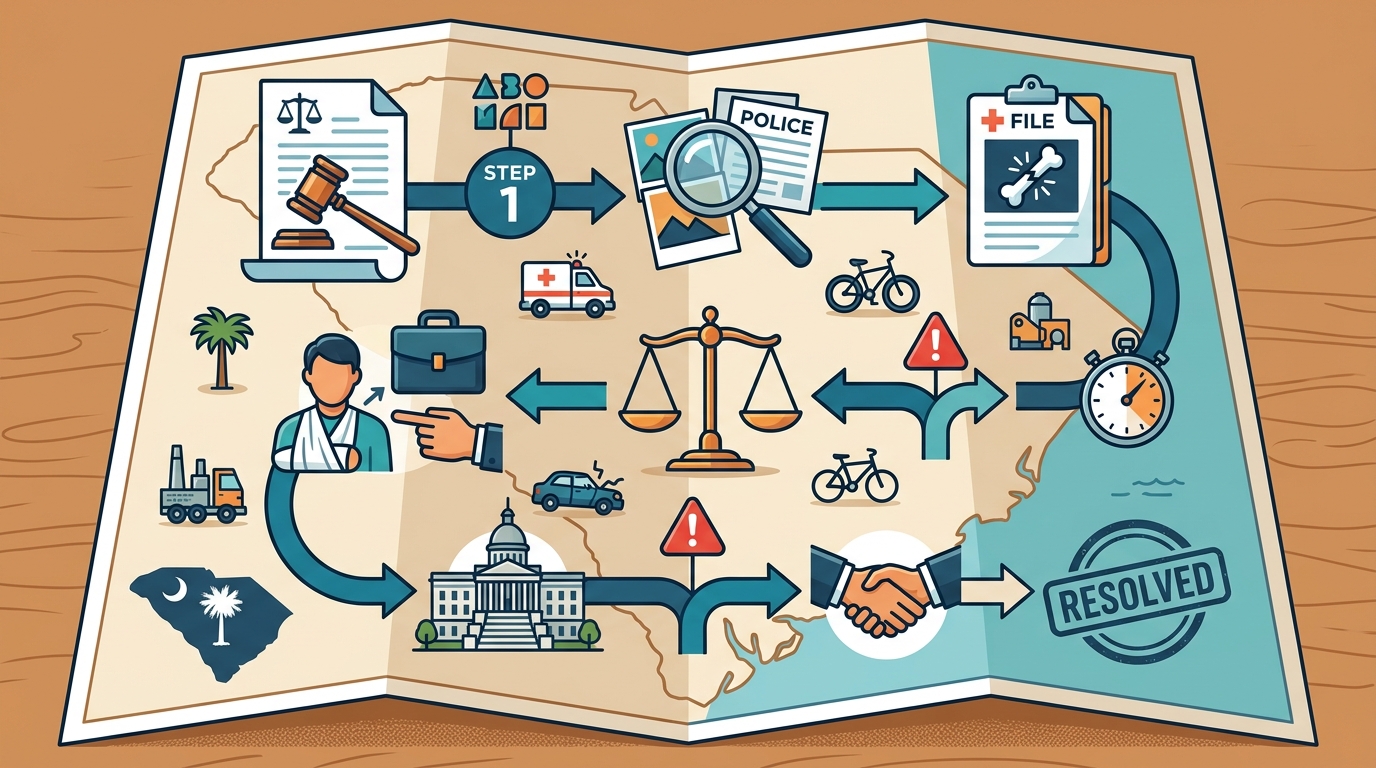
South Carolina operates under a strict modified comparative negligence rule that can completely bar your recovery if you are found even 50% at fault for an accident. This legal framework makes the initial filing process critical, as errors in documentation or timing can permanently jeopardize your financial recovery. According to recent legal analyses of state tort reforms, understanding these procedural nuances is the primary differentiator between a dismissed case and a successful settlement. This guide outlines the exact workflow to protect your rights from the moment of injury through to final resolution. (Christmas Injury Lawyers Charleston)
Step 1: Secure Immediate Medical Attention
The foundation of any personal injury claim is the medical record. In South Carolina, the link between the accident and your injuries must be medically established without delay. Medical Malpractice is the failure of a healthcare provider to deviate from the standard of care. However, in the context of your own injury, the failure to seek care is often used by defense attorneys to argue that your injuries were pre-existing or unrelated to the incident.
Visit an emergency room or your primary care physician immediately after the accident. Ensure that the physician documents the mechanism of injury, such as the force of impact in a car crash or the fall distance in a slip and fall case. This creates a contemporaneous record that is difficult for insurance adjusters to dispute later. If you wait days or weeks to seek treatment, the opposing party will likely claim that your condition deteriorated due to your own negligence during that gap in care.
For victims of catastrophic injuries, the complexity of medical documentation increases significantly. These cases often require long-term care plans, which must be projected and itemized to calculate the full value of your claim. Early medical intervention not only protects your health but also solidifies the evidentiary basis of your case.
Step 2: Document the Incident and Injuries
Evidence preservation is the second pillar of a successful claim. South Carolina courts rely heavily on tangible proof to determine liability and damages. Slip and Fall is a type of premises liability claim where a property owner fails to maintain safe conditions. In these cases, the burden of proof is often higher because you must demonstrate that the owner knew or should have known about the hazard.
Collect the following evidence at the scene if possible:
- Photographs and Videos: Capture the scene, vehicle damage, visible injuries, and contributing factors like wet floors or broken railings.
- Witness Statements: Obtain contact information from anyone who saw the incident. Independent witness accounts are often more credible than those of interested parties.
- Official Reports: Request a copy of the police report for motor vehicle accidents or the incident report for workplace injuries. These documents provide an objective third-party perspective on the events.
If the accident occurred in a commercial setting, such as a premises liability incident, request the preservation of surveillance footage immediately. Security cameras often overwrite their recordings after a short period, making timely action essential to securing video evidence.
Step 3: Notify Insurance Companies Strategically
Once you have secured medical care and documented the scene, you must notify the relevant insurance carriers. This step requires careful navigation to avoid inadvertently harming your claim. Workers' Compensation is the statutory system providing benefits to employees injured on the job. If your injury is work-related, you must report it to your employer within a strict timeframe, typically 90 days, to preserve your right to benefits.
For motor vehicle accidents, you will need to file a claim with the at-fault driver's insurance company. However, you are not obligated to provide a recorded statement to the other party's insurer without legal counsel. Insurance adjusters are trained to minimize payouts, and early statements can be used to devalue your claim. It is advisable to consult with a Charleston car accident lawyer before engaging in substantive discussions with the opposing insurer.
Be cautious when accepting an initial settlement offer. These early offers are often calculated to close the case quickly before the full extent of your injuries is known. Accepting a settlement releases you from further liability, meaning you cannot seek additional compensation if complications arise later.
Step 4: Navigate the Statute of Limitations
South Carolina has strict deadlines for filing personal injury lawsuits. Missing these deadlines results in the permanent loss of your right to sue. Wrongful Death is a legal claim brought by survivors when negligence causes a fatality. These claims have unique and often shorter statutes of limitations compared to standard injury cases.
Generally, the statute of limitations for personal injury in South Carolina is three years from the date of the injury. However, there are critical exceptions:
- Medical Malpractice: The statute is generally three years, but there is a strict two-year limit from the date the injury was or should have been discovered, with an absolute cap of seven years from the date of the act.
- Government Entities: If the defendant is a government agency, such as a city or state department, you may need to file a notice of claim within a much shorter period, often 90 days.
- Minors: In cases involving children, the statute of limitations may be tolled until the child reaches the age of majority.
For wrongful death claims, the three-year window is strict, but the calculation of damages involves complex economic and non-economic factors that require precise legal analysis. Do not wait until the last moment to act. An experienced attorney can ensure all procedural deadlines are met and that the claim is filed in the correct jurisdiction.
Step 5: Engage in Settlement Negotiations
Most personal injury claims are resolved through settlement negotiations rather than trial. This phase involves your attorney presenting a demand package to the insurance company, detailing the liability, damages, and supporting evidence. The goal is to reach a fair settlement that covers medical expenses, lost wages, pain and suffering, and other losses.
Insurance companies often employ tactics to delay or reduce payouts. They may dispute liability, argue that your injuries are less severe than claimed, or question the reasonableness of your medical bills. A skilled attorney will counter these arguments with expert testimony, economic analysis, and legal precedent.
If the insurance company refuses to offer a fair settlement, your attorney may recommend filing a lawsuit. The threat of litigation often motivates insurers to engage in more serious negotiations. However, be prepared for the possibility that the case may proceed to trial if a settlement cannot be reached.
Step 6: File a Lawsuit if Necessary
Filing a lawsuit initiates the formal litigation process. This involves drafting and filing a complaint with the appropriate South Carolina court, which outlines your allegations and the damages you seek. The defendant then has a specified period to respond with an answer or motion to dismiss.
Once the lawsuit is filed, the case enters the discovery phase. This is the pre-trial process where both sides exchange information and gather evidence. Discovery includes interrogatories (written questions), requests for production of documents, and depositions (oral testimony under oath). Discovery is often the most time-consuming part of litigation but is crucial for building a strong case.
After discovery, the case may proceed to mediation or arbitration. These alternative dispute resolution methods involve a neutral third party helping the parties reach a settlement. If mediation is unsuccessful, the case will proceed to trial. At trial, a judge or jury will hear the evidence and determine liability and damages. Auto Accidents are the most common cause of personal injury claims in South Carolina. These cases often involve complex liability issues, especially in multi-vehicle collisions or cases involving commercial trucks.
Key Takeaways
- Immediate Medical Care: Seek medical attention immediately to create a clear link between the accident and your injuries.
- Evidence Preservation: Document the scene, gather witness statements, and secure official reports as soon as possible.
- Statute of Limitations: Generally three years for personal injury, but shorter for medical malpractice and claims against government entities.
- Insurance Caution: Avoid giving recorded statements or accepting early settlements without legal advice.
- Workers' Compensation: Report work-related injuries to your employer within 90 days to preserve your benefits.
- Legal Representation: An experienced attorney can navigate complex procedures and negotiate fair settlements.
- Case Value: Compensation includes medical bills, lost wages, pain and suffering, and other damages.
Frequently Asked Questions
How long do I have to file a personal injury claim in South Carolina?
Generally, you have three years from the date of the injury to file a personal injury lawsuit in South Carolina. However, specific types of claims, such as medical malpractice or claims against government entities, have shorter deadlines.
What is South Carolina's modified comparative negligence rule?
South Carolina follows a modified comparative negligence rule with a 50% bar. This means you can recover damages only if you are found to be less than 50% at fault for the accident. Your recovery will be reduced by your percentage of fault.
Do I need a lawyer to file a personal injury claim?
While you can file a claim without a lawyer, personal injury law is complex. An attorney can help you navigate insurance negotiations, gather evidence, and ensure you receive fair compensation for your injuries.
What damages can I recover in a personal injury claim?
You can recover economic damages, such as medical bills and lost wages, and non-economic damages, such as pain and suffering. In cases of egregious negligence, punitive damages may also be available.
How does the statute of limitations affect my claim?
If you miss the statute of limitations, you lose the right to file a lawsuit. This means the insurance company will likely deny your claim, and the court will dismiss your case. It is crucial to act promptly.
What is the process for filing a workers' compensation claim?
You must report your injury to your employer within 90 days. Your employer will then file a claim with their insurance carrier. If the claim is denied, you can appeal to the South Carolina Workers' Compensation Commission.
Can I sue for a slip and fall accident?
Yes, you can sue for a slip and fall accident if you can prove that the property owner was negligent. This requires showing that the owner knew or should have known about the hazardous condition and failed to address it.
Contact Christmas Injury Lawyers
Navigating the personal injury claim process in South Carolina requires expertise, diligence, and strategic advocacy. At Christmas Injury Law, we are dedicated to fighting for the injured and their families. With over 25 years of legal experience, our team understands the complexities of South Carolina law and is committed to restoring your peace of mind.
If you or a loved one has been injured due to another's negligence, do not wait. Contact us today for a free consultation. We will evaluate your case, explain your options, and guide you through every step of the process. Call (843) 535-8000 or visit our contact page to schedule your appointment.