

Understanding the legal landscape in South Carolina is critical for anyone navigating the aftermath of an accident. According to recent data, the average personal injury settlement in the state can vary wildly, but the procedural hurdles remain consistent for all victims. If you have been injured due to negligence, knowing the exact steps to file a claim protects your rights and maximizes your potential recovery. This guide outlines the precise process from the initial incident to final resolution.
Immediate Actions After the Accident
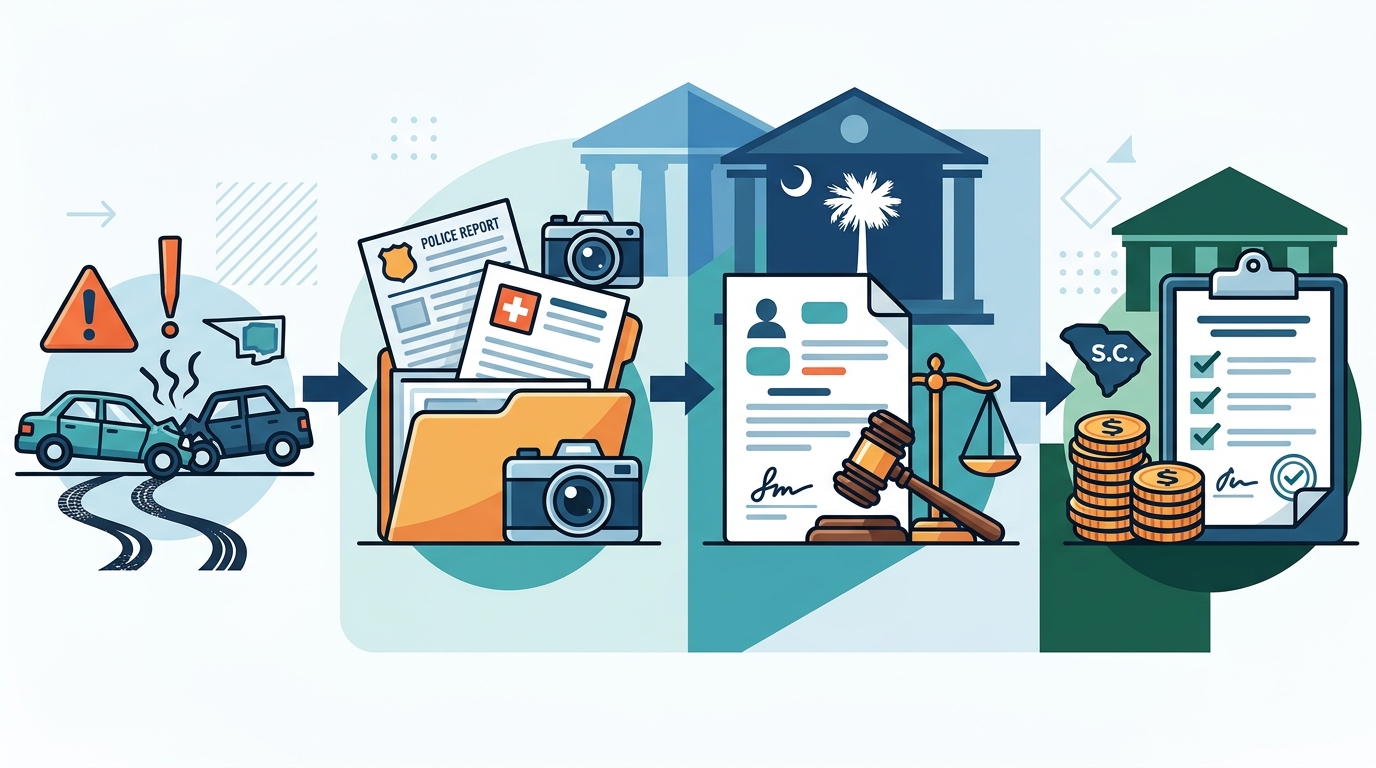
The moments following an accident dictate the strength of your future claim. South Carolina law requires prompt action to preserve evidence and establish liability. The first step is ensuring safety and calling emergency services if anyone is injured. This creates an official record of the incident, which is crucial for later proceedings.
Next, you must gather evidence at the scene. Take photographs of vehicle damage, skid marks, and visible injuries. Collect contact information from witnesses, as their testimony can be pivotal. Avoid admitting fault or apologizing at the scene, as this can be misconstrued as an admission of liability under South Carolina's contributory negligence rules.
For detailed guidance on preserving evidence, visit our blog section which covers critical post-accident protocols.
Seeking Medical Attention and Documentation
Even if you feel fine, seeking immediate medical evaluation is non-negotiable. Some injuries, such as whiplash or internal trauma, may not present symptoms until days later. A medical record created immediately after the accident establishes a direct link between the incident and your injuries.
Medical Malpractice is a complex area of law. If your injury stems from negligent medical care, the process differs significantly. Learn more about medical malpractice claims to understand the higher burden of proof required in these cases.
Keep a detailed journal of your pain levels, medical appointments, and how the injury affects your daily life. This documentation serves as tangible proof of your damages, which is essential for calculating compensation for pain and suffering.
Notifying Insurance Companies
You must notify your own insurance provider about the accident, even if you were not at fault. However, be cautious when speaking with the at-fault party's insurance adjuster. Their primary goal is to minimize payout, not to help you recover.
Do not provide a recorded statement without consulting an attorney. Insurance companies often use early statements to devalue your claim. For insights on how to handle insurance tactics, read our article on insurance company strategies.
South Carolina is a "no-fault" state only for Personal Injury Protection (PIP) coverage, but for liability claims, it follows traditional fault-based rules. Understanding this distinction is vital for determining who pays for your damages.
Investigation and Evidence Collection
A thorough investigation is the backbone of any successful personal injury claim. This phase involves gathering police reports, traffic camera footage, and expert opinions. In complex cases, such as truck accidents, investigators may analyze driver logs and maintenance records to prove negligence.
Our firm specializes in auto accident litigation, where we utilize advanced reconstruction techniques to demonstrate how the accident occurred. This technical evidence often sways insurance adjusters toward fair settlements.
Evidence must be preserved immediately. Digital data from vehicles, such as Event Data Recorders (EDRs), can be overwritten or deleted. Prompt legal intervention ensures this critical data is secured before it is lost.
Settlement Negotiations and Offers
Most personal injury claims in South Carolina are resolved through settlement negotiations rather than trial. Your attorney will calculate a demand package that includes medical bills, lost wages, property damage, and non-economic damages like pain and suffering.
The initial offer from an insurance company is rarely fair. They often lowball victims who are desperate for immediate cash. A skilled attorney will counter with a detailed justification for your damages, backed by medical and economic evidence.
If you are struggling with financial pressure during your recovery, it is important to avoid predatory settlement loans. These loans can destroy your case by forcing a quick, lowball settlement. Read our analysis on settlement loans to understand the risks.
Filing a Lawsuit and Litigation
If settlement negotiations fail, the next step is filing a lawsuit. In South Carolina, you generally have three years from the date of the accident to file a personal injury claim. This is known as the statute of limitations. Missing this deadline typically bars you from seeking compensation entirely.
Once the complaint is filed, the discovery phase begins. Both sides exchange information through depositions, interrogatories, and document requests. This phase can be lengthy and complex, requiring strategic legal maneuvering.
For those injured in maritime or longshore contexts, different federal laws apply. Learn about Longshore and Harbor Workers' Compensation to understand the specific protections available to maritime workers.
Key South Carolina Legal Standards
South Carolina operates under a modified comparative negligence rule. This means you can recover damages as long as you are less than 51% at fault for the accident. However, your compensation will be reduced by your percentage of fault.
For example, if you are found 20% at fault and your total damages are $100,000, you will receive $80,000. If you are found 51% or more at fault, you recover nothing. This rule makes establishing clear liability absolutely critical.
Understanding these legal nuances is why experienced representation is essential. Our team has a proven track record of case results that reflect our commitment to maximizing client recovery.
Key Takeaways
- Statute of Limitations: You have three years from the accident date to file a personal injury lawsuit in South Carolina.
- Comparative Negligence: You can recover damages if you are less than 51% at fault, but your award is reduced by your fault percentage.
- Evidence Preservation: Immediate documentation of the scene and medical records is crucial for proving liability and damages.
- Insurance Tactics: Adjusters may attempt to minimize payouts; avoid giving recorded statements without legal counsel.
- Specialized Claims: Maritime and workers' compensation cases follow distinct federal and state statutes requiring specialized knowledge.
- Settlement vs. Trial: Most cases settle, but being prepared for litigation often leads to better settlement offers.
Frequently Asked Questions
How long do I have to file a personal injury claim in South Carolina?
Generally, you have three years from the date of the accident to file a lawsuit. However, claims against government entities have much shorter deadlines, often as little as one year.
What is South Carolina's comparative negligence rule?
South Carolina follows a modified comparative negligence rule. You can recover damages if you are less than 51% at fault. Your compensation is reduced by your percentage of fault.
Do I need a lawyer to file a personal injury claim?
While you can file a claim yourself, the legal process is complex. An attorney ensures proper documentation, negotiates with insurers, and protects you from procedural errors.
What damages can I recover in a personal injury claim?
You can recover economic damages like medical bills and lost wages, as well as non-economic damages like pain and suffering. In cases of extreme negligence, punitive damages may also be available.
How does the statute of limitations affect my case?
If you miss the statute of limitations deadline, you lose the right to sue. This makes timely legal consultation critical for preserving your claim.
What if the at-fault driver is uninsured?
If the at-fault driver is uninsured, you may file a claim under your own uninsured motorist coverage. Our firm can help you navigate these specific policy requirements.
Get Expert Legal Representation Today
Navigating a personal injury claim in South Carolina requires precision, knowledge, and relentless advocacy. Do not face insurance companies or complex legal deadlines alone. Contact Christmas Injury Lawyers for a free consultation. We are dedicated to restoring your peace of mind and securing the compensation you deserve. Call us at (843) 535-8000 to discuss your case.