

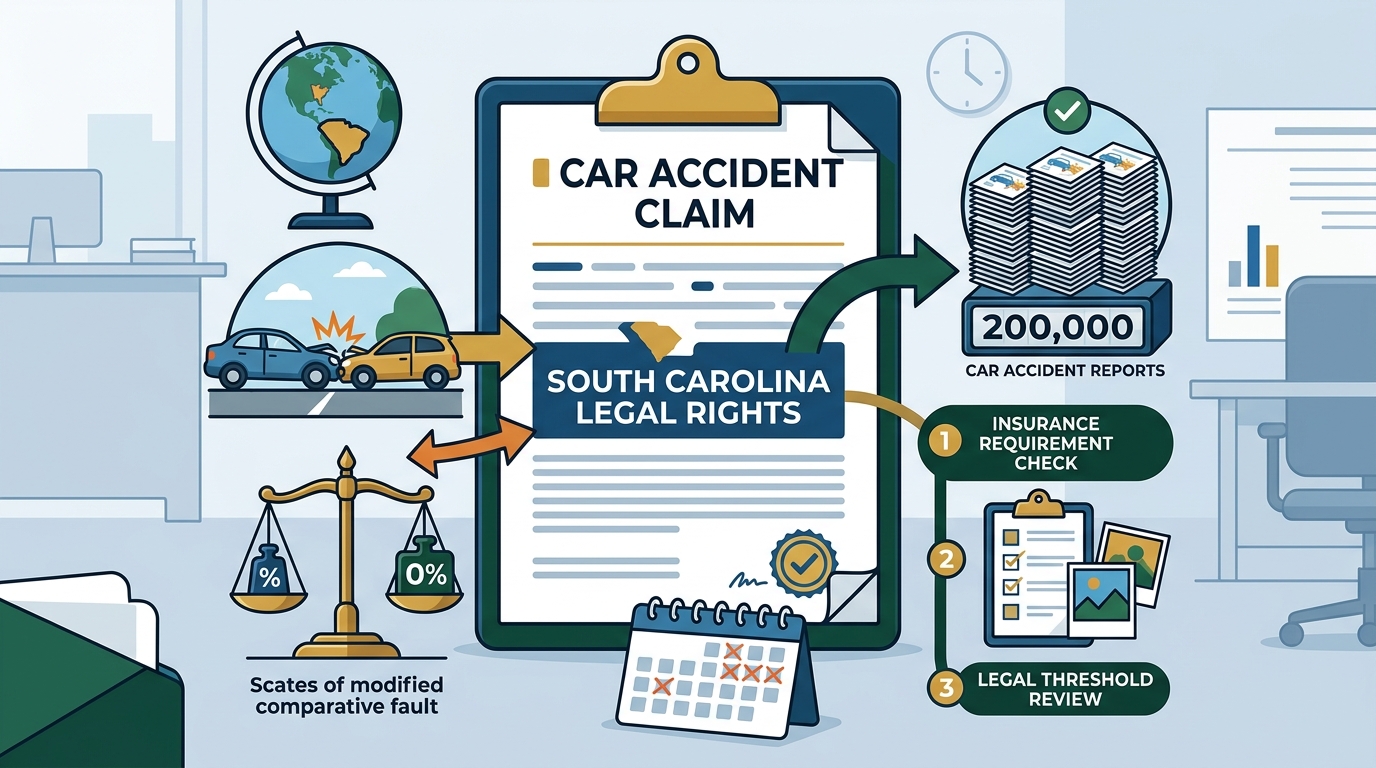
South Carolina operates as a modified comparative fault state, a legal framework that fundamentally dictates how compensation is calculated after a collision. According to recent traffic safety data, over 200,000 motor vehicle accidents occur annually in the state, creating a high-stakes environment for injured drivers. Understanding the specific legal thresholds and insurance requirements is not merely administrative; it is the difference between securing full restitution and facing financial ruin. This guide outlines the precise options available to victims seeking justice and recovery. (Christmas Injury Lawyers Charleston)
Understanding South Carolina Fault Laws
South Carolina is a modified comparative fault jurisdiction. This means that liability for an accident is assigned as a percentage to each party involved. If you are involved in a crash, the insurance adjusters and potentially a jury will determine how much you contributed to the incident. This legal standard is critical because it directly impacts your ability to recover damages. (Christmas Injury Lawyers Charleston)
Comparative fault is a legal doctrine where damages are apportioned based on the degree of fault. In South Carolina, this doctrine is modified by a specific statutory threshold. If you are found to be partially at fault, your compensation is reduced by your percentage of responsibility. However, there is a hard limit to how much fault you can bear and still recover anything at all. (Blog Christmas Injury Lawyers)
Understanding this distinction is vital before you speak to any insurance representatives. Early statements can be used to assign you a higher percentage of fault, thereby reducing your potential recovery. It is essential to document the scene, gather witness information, and seek legal counsel immediately to protect your position. (Case Results Christmas Injury)
Insurance Requirements and Policies
Before exploring claim options, it is necessary to understand the baseline insurance requirements in South Carolina. State law mandates minimum coverage levels for all registered vehicles. These requirements are designed to ensure that victims have some source of compensation, even if the at-fault driver is underinsured.
The state requires drivers to carry liability insurance with the following minimum limits:
- 25/50/25 Coverage: $25,000 for bodily injury per person, $50,000 total for bodily injury per accident, and $25,000 for property damage.
Many drivers carry only these minimums. If the at-fault driver has only the minimum policy and your damages exceed those limits, you will face significant gaps in coverage. This is where your own policy options and additional legal strategies become crucial for full recovery.
Filing with Your Own Insurance
One of the most immediate options for securing medical treatment and vehicle repair is filing a claim with your own insurance provider. This is particularly relevant if you have specific coverages attached to your policy. It is important to note that filing with your own insurer does not necessarily mean they will pay the final bill, but it provides immediate resources.
Personal Injury Protection (PIP) is a type of coverage that pays for medical expenses and lost wages regardless of who caused the accident. South Carolina is not a no-fault state, but many policies offer PIP as an optional add-on. If you have PIP, you can file a claim immediately to cover your initial medical costs.
Another critical coverage is MedPay (Medical Payments Coverage). Similar to PIP, MedPay covers medical expenses for you and your passengers after an accident, regardless of fault. It is a secondary payer, meaning it kicks in after your health insurance. Filing a MedPay claim can help bridge the gap while your liability claim is being processed.
Third-Party Liability Claims
The primary method for recovering compensation for pain, suffering, and significant medical bills is filing a third-party liability claim against the at-fault driver. This process involves proving that the other driver was negligent and that their negligence directly caused your injuries.
To succeed in a third-party claim, you must establish four key elements:
- Duty of Care: The other driver had a legal obligation to drive safely.
- Breach of Duty: The driver failed to meet that obligation (e.g., speeding, distracted driving).
- Causation: The breach directly caused the accident.
- Damages: You suffered actual financial or physical harm.
Insurance companies will investigate the accident to determine liability. They may use police reports, witness statements, and accident reconstruction experts to build their case. If they determine the other driver is at fault, they will negotiate a settlement. If they deny liability, you may need to pursue litigation.
Uninsured Motorist Coverage
A significant risk in South Carolina is hitting a driver who does not have insurance. According to national insurance data, a substantial percentage of drivers on the road are uninsured. If you are involved in an accident with such a driver, your standard liability claim options are limited.
This is why Uninsured Motorist (UM) Coverage is essential. UM coverage steps in to pay for your injuries and damages if the at-fault driver has no insurance. It also often includes Underinsured Motorist (UIM) Coverage, which applies when the at-fault driver has insurance, but their limits are insufficient to cover your total losses.
If you do not have UM/UIM coverage, you may be forced to pay for your own medical bills out of pocket. This is a common scenario in hit-and-run cases or when the other driver’s assets are minimal. Reviewing your own policy to ensure you have adequate UM/UIM limits is a critical step in protecting your financial future.
The 50 Percent Rule Explained
South Carolina’s modified comparative fault rule includes a specific bar to recovery. You can only recover damages if you are found to be less than 50% at fault for the accident. This is known as the 50% bar rule.
If you are found to be 50% or more at fault, you are completely barred from recovering any compensation from the other party. For example, if you are found to be 50% responsible for the crash, you receive nothing. If you are found to be 49% responsible, you can recover 51% of your total damages.
This rule creates a high-stakes environment for liability disputes. Insurance adjusters may try to push your fault percentage to 50% or higher to avoid paying a claim. It is vital to have experienced legal representation to challenge unfair fault assignments and ensure your percentage of fault is accurately calculated.
Statute of Limitations
Time is a critical factor in personal injury cases. South Carolina has a strict statute of limitations for filing personal injury lawsuits. Generally, you have three years from the date of the accident to file a lawsuit. If you fail to file within this window, you lose your right to seek compensation through the court system.
There are very few exceptions to this rule, such as cases involving minors or government entities. However, relying on exceptions is risky and requires immediate legal analysis. Do not wait until the clock is ticking down to seek advice. Early consultation allows your attorney to preserve evidence, interview witnesses, and build a strong case before memories fade.
Key Takeaways
- South Carolina is a modified comparative fault state with a 50% bar to recovery.
- You must be less than 50% at fault to recover any damages from the other party.
- Minimum liability insurance in SC is 25/50/25 coverage.
- Uninsured Motorist (UM) coverage is crucial for protecting yourself from uninsured drivers.
- You have three years from the accident date to file a personal injury lawsuit.
- Christmas Injury Lawyers has over 25 years of experience handling complex injury cases.
- Immediate legal consultation helps preserve evidence and protect your fault percentage.
Frequently Asked Questions
What is the statute of limitations for car accidents in South Carolina?
In South Carolina, you generally have three years from the date of the accident to file a personal injury lawsuit. Missing this deadline typically results in the loss of your right to compensation.
Can I sue if I am partially at fault for the accident?
Yes, but only if you are found to be less than 50% at fault. If you are 50% or more at fault, you are barred from recovering any damages under South Carolina’s modified comparative fault rule.
What happens if the other driver has no insurance?
If the at-fault driver is uninsured, you can file a claim under your own Uninsured Motorist (UM) coverage. If you do not have UM coverage, you may have to pay for your damages out of pocket.
Do I need a lawyer to file a car accident claim?
While you can file a claim without a lawyer, complex cases involving severe injuries or disputed liability often require legal expertise. An attorney can help negotiate with insurance companies and ensure you receive fair compensation.
What is the minimum insurance required in South Carolina?
South Carolina requires drivers to carry minimum liability coverage of $25,000 for bodily injury per person, $50,000 for total bodily injury per accident, and $25,000 for property damage.
How does comparative fault affect my settlement?
Your settlement amount is reduced by your percentage of fault. If you are awarded $100,000 but are found 20% at fault, you will receive $80,000.
What types of damages can I recover?
You can recover economic damages such as medical bills, lost wages, and property damage, as well as non-economic damages like pain and suffering, emotional distress, and loss of enjoyment of life.
Contact Christmas Injury Lawyers
Navigating the complexities of South Carolina’s insurance laws and liability rules requires experienced legal guidance. At Christmas Injury Lawyers, we are dedicated to fighting for the injured and their families. With over 25 years of legal experience, we have helped countless clients secure the compensation they deserve.
Do not face insurance companies alone. Contact us today for a free consultation to discuss your case. We serve clients throughout South Carolina, including Columbia, Mount Pleasant, North Charleston, and Summerville. Visit our About Us page to learn more about our firm’s history and commitment to justice.
Call us at (843) 535-8000 or contact us online to schedule your free consultation. Let us help you restore your peace of mind.