

Millions of American civilians work overseas in support of U.S. military operations, yet few understand the specific legal protections available to them if they are injured on the job. The Defense Base Act (DBA) is the primary federal statute that extends workers' compensation benefits to these individuals. Understanding the requirements for filing a claim under this act is critical for ensuring you receive the medical care and financial support you deserve. According to the U.S. Department of Labor, the DBA covers a vast network of contractors and subcontractors working on U.S. military bases or providing services to the armed forces abroad. This guide outlines the essential criteria, documentation, and procedural steps required to navigate the DBA claims process successfully. (Christmas Injury Lawyers Charleston)
Eligibility Requirements for DBA Coverage
The Defense Base Act is an extension of the Longshore and Harbor Workers' Compensation Act (LHWCA). To file a claim, you must meet specific statutory criteria regarding your employment status and the location of your injury. The core requirement is that you must be a civilian employee working outside the United States. This includes U.S. citizens and non-citizens alike, provided the employment relationship meets the act's definitions. (Christmas Injury Lawyers Charleston)
The Defense Base Act is a federal law that provides workers' compensation benefits to civilian employees of U.S. contractors and subcontractors working on U.S. military bases abroad. If you are injured while performing your duties under a contract that supports the U.S. armed forces, you are likely covered. The act applies regardless of where the injury occurs, as long as it arises out of and in the course of employment. This broad scope ensures that workers are protected even in high-risk environments where traditional state workers' compensation laws do not apply. (Blog Christmas Injury Lawyers)
Defining the Employment Relationship
Establishing a clear employment relationship is the first hurdle in any DBA claim. You must be employed by a contractor or subcontractor who holds a contract with the U.S. government. This includes employees of private companies providing services such as logistics, construction, security, and medical support. The key factor is the nature of the contract, not just your job title. If your employer's contract is subject to the DBA, your injuries are covered. (Case Results Christmas Injury)
What Activities Are Covered?
The DBA covers a wide range of activities, but it is not unlimited. The act specifically targets work that supports the U.S. military effort overseas. Understanding the scope of these activities helps determine if your claim is valid.
The Defense Base Act covers employees working on U.S. military bases, public works contracts with the U.S. government, and contracts approved by the President for providing services to the U.S. armed forces. This includes work on bases in countries like Iraq, Afghanistan, and various locations in Europe and Asia. It also extends to employees working on public works projects funded by the U.S. government, such as infrastructure development in allied nations.
Types of Contracts Under DBA
Not all government contracts trigger DBA coverage. The act applies to contracts that are specifically approved under the Defense Base Act. This includes contracts for construction, supply, and services that are essential to military operations. If you are working for a company that provides goods or services to the military, your employer is likely required to carry DBA insurance. This requirement ensures that funds are available to pay for medical treatment and lost wages if an injury occurs.
The Step-by-Step Filing Process
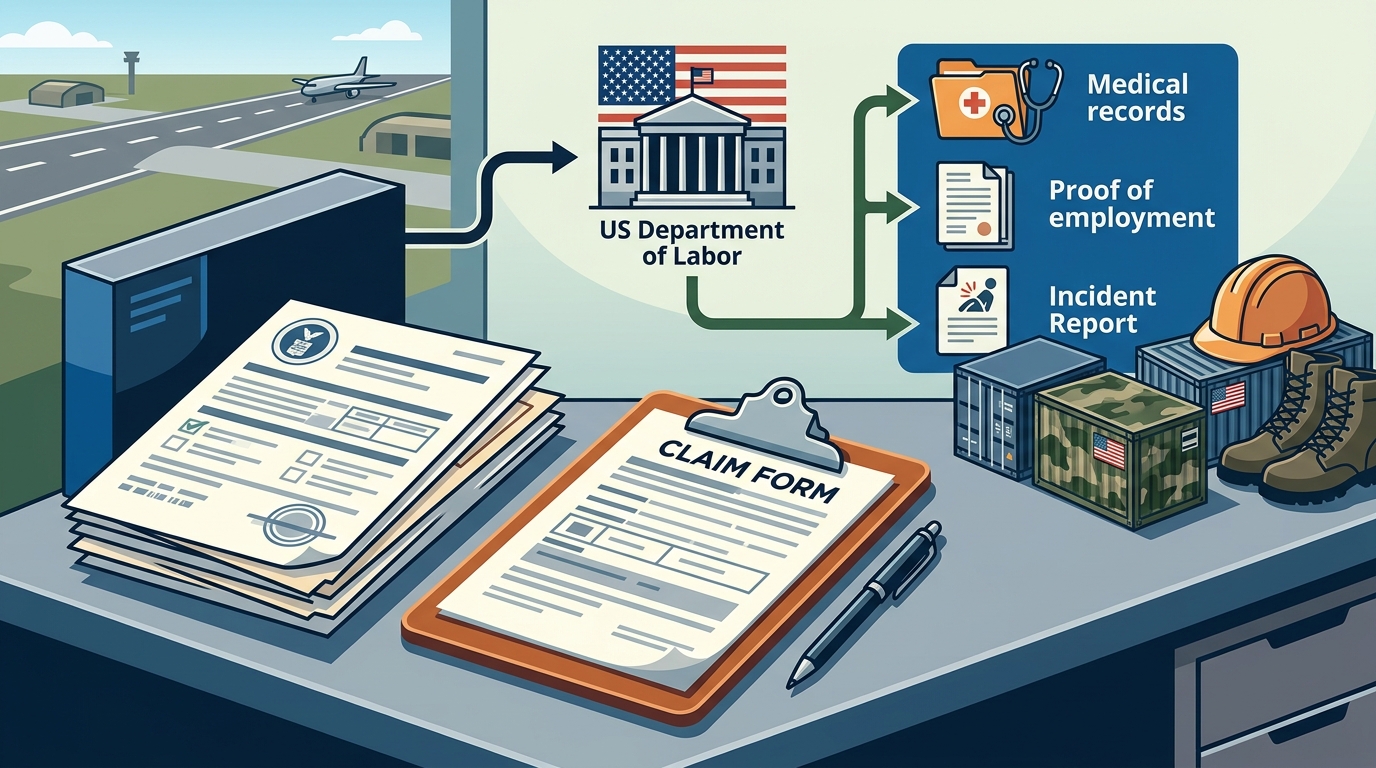
Filing a claim under the Defense Base Act involves strict procedural deadlines and documentation requirements. Missing a deadline can result in the denial of your benefits. The process begins with immediate notification and ends with a formal claim submission to the appropriate administrative body.
The Defense Base Act requires that you notify your employer of your injury within a specific timeframe, typically within 30 days of the incident. Failure to provide timely notice can complicate your claim. After notification, you must seek medical attention and ensure that your employer files the necessary reports with the Department of Labor. The claim is then adjudicated by an Office of Workers' Compensation Programs (OWCP) supervisor.
Essential Documentation
Gathering comprehensive documentation is vital for a successful DBA claim. You must collect medical records, incident reports, and witness statements. These documents serve as evidence of the causal link between your work duties and your injury. Without clear documentation, it is difficult to prove that the injury arose out of and in the course of employment. Your legal team will help you organize these materials to build a strong case.
Types of Benefits Available
DBA claims can result in several types of compensation, depending on the severity of the injury and its impact on your ability to work. The act provides a safety net for workers who face life-altering consequences due to workplace accidents.
The Defense Base Act provides medical benefits, disability benefits, and vocational rehabilitation services to injured workers. Medical benefits cover all necessary treatment, including surgery, therapy, and medication. Disability benefits are divided into temporary total, temporary partial, permanent total, and permanent partial categories. These benefits are calculated based on your average weekly wage and the nature of your impairment.
Understanding Disability Classifications
Disability benefits under the DBA are not one-size-fits-all. Temporary total disability benefits are paid when you are completely unable to work for a short period. Permanent partial disability benefits are awarded for specific impairments, such as the loss of a limb or hearing, even if you can return to some form of work. The calculation of these benefits involves complex formulas that consider your pre-injury earnings and the degree of disability.
Common Challenges in DBA Claims
While the DBA provides robust protections, claimants often face significant hurdles. Insurance carriers may attempt to deny claims by arguing that the injury did not occur in the course of employment. They may also dispute the extent of your disability or the necessity of certain medical treatments.
The Defense Base Act claims process can be adversarial, with insurance companies often prioritizing cost containment over worker welfare. Proving that an injury occurred due to a risk peculiar to your work environment is crucial. For example, injuries resulting from hostile fire or war risks are covered, but the burden of proof can be high. Navigating these challenges requires experienced legal representation to ensure your rights are protected.
Hostile Fire and War Risk
Injuries resulting from hostile fire or war risk are a unique aspect of DBA coverage. These claims often involve complex jurisdictional and factual issues. The act provides enhanced protections for these injuries, but the definition of "hostile fire" can be contested. Establishing that your injury was a direct result of hostile action requires detailed evidence and expert testimony.
Key Takeaways
- Eligibility: You must be a civilian employee working for a U.S. government contractor or subcontractor outside the United States.
- Notification: You must notify your employer of your injury within 30 days to preserve your right to benefits.
- Coverage Scope: The DBA covers injuries on U.S. military bases, public works projects, and contracts approved by the President.
- Benefits: Available benefits include medical care, disability payments, and vocational rehabilitation.
- Legal Representation: DBA claims are complex and often contested; experienced counsel is essential for maximizing compensation.
- Adjudication: Claims are overseen by the Office of Workers' Compensation Programs (OWCP) within the Department of Labor.
- Hostile Fire: Injuries from hostile fire or war risk have specific coverage provisions that require careful documentation.
Frequently Asked Questions
Who is covered under the Defense Base Act?
The Defense Base Act covers civilian employees of U.S. contractors and subcontractors working on U.S. military bases abroad, on public works contracts with the U.S. government, and on contracts approved by the President for providing services to the U.S. armed forces.
What is the deadline for filing a DBA claim?
You must notify your employer of your injury within 30 days of the incident. However, the formal claim for compensation must be filed with the Office of Workers' Compensation Programs within three years of the date of injury or the last payment of compensation.
Does the DBA cover injuries from hostile fire?
Yes, the Defense Base Act specifically covers injuries resulting from hostile fire or war risk. These claims are processed under the same framework but may involve additional evidentiary requirements to establish the cause of the injury.
What benefits are available if I am permanently disabled?
Permanent disability benefits are available for both total and partial disabilities. The amount is based on your average weekly wage and the degree of impairment. You may also be eligible for vocational rehabilitation if you cannot return to your previous employment.
Can I sue my employer for a DBA injury?
No, the Defense Base Act provides the exclusive remedy for covered injuries. You cannot sue your employer for negligence. Instead, you must file a claim for workers' compensation benefits through the OWCP. However, you may have grounds for a third-party liability claim if another party caused your injury.
What is the role of the OWCP in DBA claims?
The Office of Workers' Compensation Programs (OWCP) administers the DBA. OWCP supervisors adjudicate claims, determine eligibility, and ensure that employers and insurers comply with the act's requirements. They play a central role in resolving disputes and approving benefits.
How is disability calculated under the DBA?
Disability benefits are calculated using a formula based on your average weekly wage and the percentage of disability determined by medical evidence. Temporary benefits are paid at two-thirds of your wage, while permanent benefits may be adjusted based on your age and earning capacity.
Contact Christmas Injury Lawyers
If you have been injured while working overseas under the Defense Base Act, you need experienced legal representation to navigate the complex claims process. Christmas Injury Lawyers has a proven track record of securing favorable outcomes for injured workers and their families. Our team understands the unique challenges of DBA claims and is dedicated to fighting for your rights. Contact us today to schedule your free consultation and discuss your case.
Call (843) 535-8000 or visit our contact page to get started. We serve clients in North Charleston, Summerville, Mt. Pleasant, and Columbia, SC, and handle DBA claims nationwide.