

Common Mistakes in Defense Base Act Claims for Overseas Contractors and How to Avoid Them
Overseas contractors face unique legal hurdles when injured on foreign soil. According to the U.S. Department of Labor, the Defense Base Act (DBA) provides workers' compensation coverage for civilian employees working on U.S. military bases or under government contracts abroad. However, navigating this system is fraught with procedural traps. A single administrative error can delay benefits for months or result in a total denial of your claim. This guide outlines the most critical mistakes and provides actionable strategies to protect your rights and ensure you receive the medical care and financial recovery you deserve. (About Us Christmas Injury)
Understanding the Defense Base Act Coverage
The Defense Base Act is an extension of the Longshore and Harbor Workers' Compensation Act. It applies to civilian workers employed on U.S. military bases abroad, those working on public works contracts with the U.S. government, and those providing goods or services under an aid contract in a foreign country. DBA coverage is mandatory for employers, meaning they cannot opt out of providing insurance for their overseas staff. (Christmas Injury Lawyers South)
Many contractors mistakenly believe that their local employment contract or the laws of the host country govern their injury claim. This is incorrect. The DBA supersedes local laws for covered workers. Understanding this federal jurisdiction is the first step in avoiding procedural errors. If you are injured while performing duties under a covered contract, you are entitled to medical benefits, disability payments, and vocational rehabilitation if you cannot return to your previous role. (Blog Christmas Injury Lawyers)
For more information on how federal laws protect civilian workers abroad, you can review resources from the U.S. Department of Labor.
Critical Reporting Mistakes and Timelines
One of the most common reasons for claim denial is the failure to report the injury promptly. The DBA has strict notice requirements that vary slightly depending on the specific contract terms, but general federal guidelines require immediate notification to your employer.
Delayed Notification
Waiting days or weeks to report an injury can be interpreted as evidence that the injury was not work-related. Insurance adjusters often use delayed reporting to dispute the causal link between your duties and your condition. Report every injury, no matter how minor, on the day it occurs. This creates an official record that anchors your claim in the timeline of your employment.
Inadequate Documentation
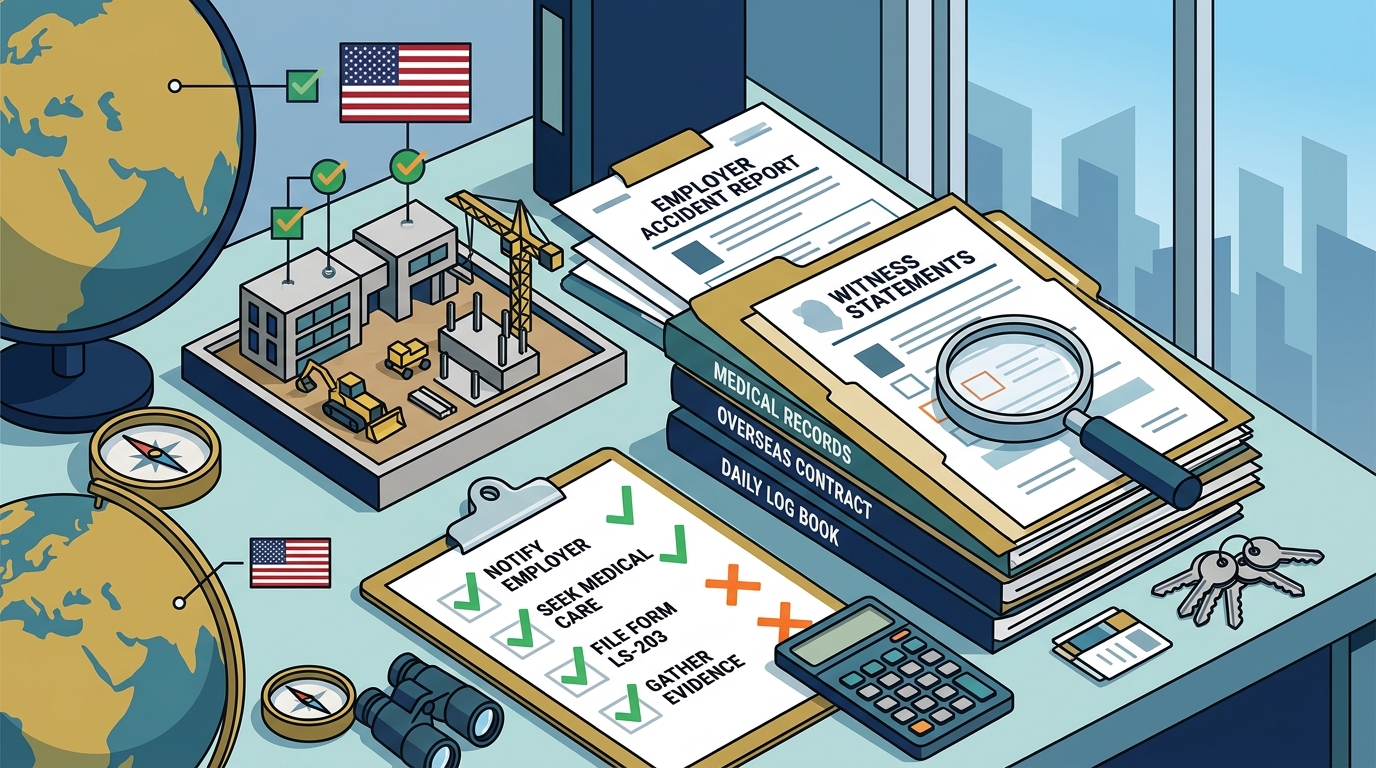
Verbal reports are insufficient. You must submit a written report to your employer and, if required, to the Office of Workers' Compensation Programs (OWCP). Keep copies of all emails, incident reports, and medical records. If your employer refuses to file the claim, you may need to file it yourself. Failure to file the claim within the statutory period can bar your rights to benefits entirely.
According to legal precedents set by the Office of Workers' Compensation Programs, timely filing is a jurisdictional requirement that cannot be waived by informal agreements.
Medical Treatment and Provider Selection
Overseas contractors often face limited medical infrastructure. This reality leads to several critical mistakes regarding treatment choices and documentation.
Choosing Unauthorized Providers
While emergency care is always permitted, non-emergency treatment should ideally be coordinated with your employer or insurer. Some contracts require you to use specific medical facilities or obtain pre-authorization for specialists. Visiting a provider outside the approved network without justification can lead to denied reimbursement for medical bills.
Failure to Follow Medical Advice
Another frequent error is discontinuing treatment prematurely. If you stop seeing your doctor because you feel better, you may lose the opportunity to document the full extent of your impairment. Consistent medical documentation is the backbone of your disability claim. If you are unable to work, you need a clear medical trail showing your inability to perform your duties.
For guidance on workers' compensation medical rights, refer to the National Conference of State Legislatures resources on worker protections.
Handling Employer and Insurer Responses
Insurance companies for DBA claims are sophisticated and often employ strategies to minimize payouts. Understanding their tactics is essential to avoiding common pitfalls.
Accepting Early Settlements
Insurers may offer a quick settlement before you have reached Maximum Medical Improvement (MMI). This is a dangerous move. Accepting a lump sum early often waives your right to future medical benefits and ongoing disability payments. If your condition worsens or requires additional surgery, you will have no recourse. Never sign a settlement agreement without independent legal review.
Ignoring Denial Letters
If your claim is denied, do not ignore the notice. DBA claims have strict appeal deadlines. Missing a deadline to file a request for a hearing with the OWCP can result in the permanent loss of your claim. You must act quickly to challenge any adverse decision.
For insights into insurance claim strategies, the Investopedia provides detailed explanations of how insurers evaluate and process workers' compensation claims.
The Role of Legal Representation
Given the complexity of the DBA and the high stakes involved, seeking legal counsel is not just advisable; it is often necessary. Many contractors believe they can handle the process alone, but the procedural nuances can be overwhelming.
Contingency Fee Structures
Most DBA attorneys work on a contingency fee basis. This means you pay no upfront costs, and the attorney's fees are regulated by the OWCP. Typically, fees are capped at a percentage of the recovered benefits, ensuring that legal representation is accessible to all workers regardless of their financial status.
Avoiding Conflicts of Interest
Do not rely on advice from your employer's insurance adjuster. Their goal is to minimize costs, not to protect your rights. An independent attorney represents your interests exclusively. They can negotiate with insurers, file necessary paperwork, and represent you at hearings.
For more information on finding qualified legal representation, you can explore resources from the Lawyers.com directory of workers' compensation specialists.
Key Takeaways for Overseas Workers
- Immediate Reporting: Report all injuries to your employer in writing on the day they occur to establish a clear timeline.
- Documentation: Keep copies of all medical records, incident reports, and correspondence with insurers.
- Medical Compliance: Follow all medical advice and attend all scheduled appointments to maintain a robust medical record.
- No Early Settlements: Avoid accepting lump-sum settlements before reaching Maximum Medical Improvement.
- Legal Counsel: Consult with an experienced DBA attorney before signing any documents or accepting payments.
- Appeal Deadlines: Never ignore denial letters; strict deadlines apply for filing appeals with the OWCP.
- Know Your Rights: Understand that the DBA supersedes local laws for covered workers on U.S. contracts.
Frequently Asked Questions
Who is covered under the Defense Base Act?
The DBA covers civilian employees working on U.S. military bases abroad, those working on public works contracts with the U.S. government, and those providing goods or services under an aid contract in a foreign country.
What is the statute of limitations for filing a DBA claim?
You must file a claim with the Office of Workers' Compensation Programs within one year of the date of injury or the date you knew or should have known that your injury was work-related.
Can I choose my own doctor?
In emergency situations, you can go to the nearest appropriate medical facility. For non-emergency care, you may need to follow your employer's or insurer's designated provider list, depending on the specific contract terms.
What benefits are available under the DBA?
Benefits include full medical coverage for work-related injuries, disability payments for lost wages, vocational rehabilitation if you cannot return to your previous job, and death benefits for dependents in fatal cases.
Do I need a lawyer to file a DBA claim?
While not legally required, it is highly recommended. The claims process is complex, and an attorney can help ensure you receive the maximum benefits entitled to you under the law.
What happens if my claim is denied?
If your claim is denied, you have the right to request a hearing before an Administrative Law Judge. You must file a request for hearing within specific timeframes outlined in the denial notice.
Are attorney fees covered by the DBA?
Yes, reasonable attorney fees are typically paid by the employer or insurer, not the employee, provided the claim is successful or contested. Fees are regulated by the OWCP.
Protect Your Rights and Recovery
Overseas contractors face significant risks, but they also have powerful legal protections. Do not let procedural mistakes jeopardize your financial future. If you have been injured while working under a Defense Base Act contract, contact Christmas Injury Lawyers immediately. Our team specializes in complex workers' compensation cases and is ready to fight for the benefits you deserve.
Contact us today for a free consultation. We offer no fees unless we recover money for you, ensuring that you have access to top-tier legal representation without financial risk.