

How to Find the Best Personal Injury Lawyer in Charleston, SC
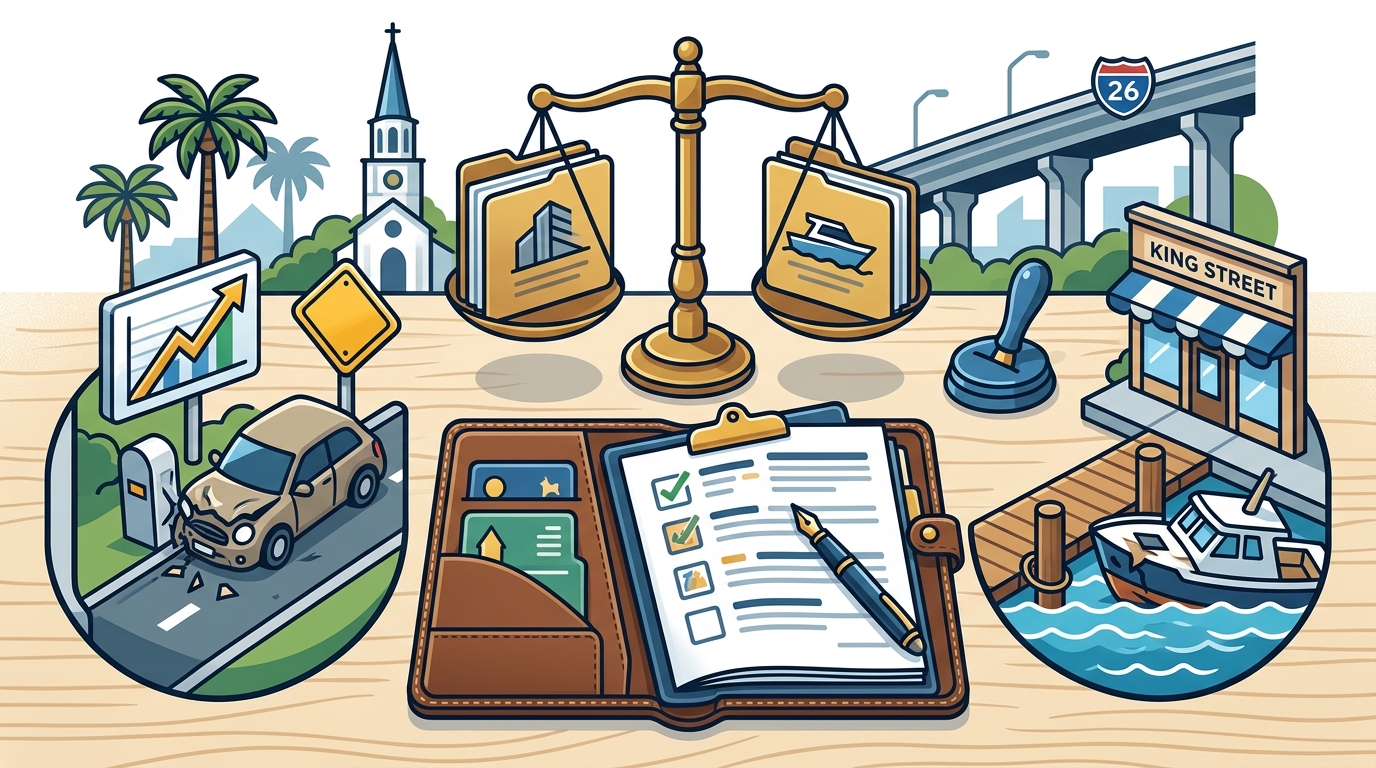
Charleston is one of the fastest-growing cities in the Southeast, and with that growth come more accidents, more insurance disputes, and more need for qualified legal representation. Whether you were hurt in a collision on I-26, a slip-and-fall on King Street, or a boating mishap in Charleston Harbor, the attorney you choose can make or break your financial recovery. This step-by-step guide shows you exactly how to evaluate, compare, and hire the right personal injury lawyer in Charleston.
Why Your Choice of Lawyer Matters in Charleston
Insurance companies move quickly after an accident. They may call you before you have even spoken to an attorney, hoping to settle your claim for far less than it is worth. A qualified personal injury lawyer levels the playing field by investigating your case, calculating the true cost of your injuries, and negotiating aggressively on your behalf.
Charleston's metro area has a population exceeding 760,000, and the city welcomes more than six million visitors each year. High traffic volumes across the Ravenel Bridge, I-26, and US-17 contribute to frequent collisions. Greenville and Charleston Counties consistently top the lists of South Carolina counties with the most traffic collisions, including fatal and injury-producing crashes. Choosing the best attorney in this environment is not optional — it is essential.
Step 1 — Verify Relevant Experience and Case Focus
Not every attorney who advertises personal injury work actually concentrates on it. Some firms handle criminal defense, family law, and estate planning alongside the occasional injury claim. Look for a lawyer or firm whose primary practice is personal injury. Common case types in Charleston include:
- Car and truck accidents — the most frequent personal injury claims in the region
- Medical malpractice — misdiagnosis, surgical errors, and medication mistakes
- Premises liability — slip-and-fall injuries on commercial or residential property
- Dog bites — South Carolina imposes strict liability on dog owners
- Workplace injuries — construction sites, warehouses, and industrial facilities
- Boating accidents — common on Charleston Harbor, the Ashley River, and Shem Creek
Ask every prospective attorney how many cases similar to yours they have handled in the last three years. Experience with your specific injury type matters far more than total years in practice.
Step 2 — Check Credentials, Awards, and Peer Recognition
Third-party recognition offers an objective lens. The Super Lawyers rating service uses a peer-influenced, research-driven selection process that recognizes the top five percent of attorneys in each state, and the top 2.5 percent for its Rising Stars list. Directories like Justia, Avvo, and Best Lawyers in America also provide useful attorney profiles with ratings, client reviews, and case results.
Look for distinctions such as:
- Super Lawyers or Rising Stars designation
- National Trial Lawyers Top 100 or Top 40 Under 40
- Martindale-Hubbell AV Preeminent rating
- Membership in the South Carolina Association for Justice
- Board certification in civil trial advocacy
These credentials signal that an attorney's peers and independent evaluators regard them highly — a strong indicator of quality.
Step 3 — Review Past Results and Settlement History
While every case is unique, a firm's track record provides insight into its capability and willingness to fight. Charleston-area firms have secured significant results, including multi-million-dollar settlements in catastrophic injury and wrongful death cases. For instance, some firms have recovered settlements exceeding $10 million in cases involving severe negligence, while others have obtained substantial six-figure verdicts in car accident and premises liability disputes.
When evaluating results, ask:
- What is the largest settlement or verdict you have obtained in a case like mine?
- What percentage of your cases settle versus go to trial?
- Do you have trial experience, or do you exclusively settle?
A firm that prepares every case as though it will go to trial typically gains more leverage during negotiations, because insurance companies recognize that the attorney is willing to litigate if a fair offer is not made.
Step 4 — Assess Communication and Client-First Culture
A strong lawyer-client relationship depends on transparency and responsiveness. During your initial interactions, evaluate how quickly the firm returns your call, how clearly they explain the legal process, and whether they take time to understand your specific situation.
A good personal injury lawyer will meet you in person, get to know you and your family, and dig deep into how your injuries have impacted your life. They should keep you updated as the case proceeds and involve you in settlement negotiations, mediations, and trial preparation.
Warning signs include a firm that:
- Passes you off to paralegals with no attorney contact
- Cannot explain its litigation strategy in plain language
- Pressures you to accept a quick settlement
Step 5 — Understand Fee Structures Before You Sign
Nearly all personal injury attorneys in Charleston work on a contingency fee basis. This means you pay nothing upfront and only owe a fee if the lawyer successfully wins compensation for you. Contingency fees typically range from 33 percent to 40 percent of the recovery, depending on whether the case settles or goes to trial.
Before signing a retainer agreement, clarify:
- The exact contingency percentage at each stage (pre-suit, post-filing, trial)
- Whether case costs (filing fees, expert witnesses, depositions) are deducted before or after the attorney fee
- Whether you owe anything if the firm does not recover compensation
Step 6 — Use the Free Consultation Strategically
Most Charleston personal injury firms offer a free initial consultation. Treat this meeting as a two-way interview. Bring your accident report, medical records, insurance correspondence, and a written list of questions. Evaluate the attorney on:
- Preparation: Did they review your materials before the meeting?
- Honesty: Do they acknowledge weaknesses in your case?
- Strategy: Can they outline a clear plan of action?
- Timeline: Do they provide a realistic timeframe for resolution?
Consult with at least two or three firms before making a final decision. The consultation is your chance to gauge whether the firm's resources, expertise, and personality align with your needs.
South Carolina Laws That Affect Your Personal Injury Claim
Understanding a few key legal principles will help you ask the right questions during your attorney search:
- Statute of Limitations
- South Carolina generally grants a three-year window from the date of injury to file a personal injury lawsuit, as outlined in S.C. Code of Laws § 15-3-530. Missing this deadline almost always bars your claim entirely.
- Comparative Negligence
- South Carolina follows a modified comparative negligence rule. If you are found to be 51 percent or more at fault, you cannot recover any compensation. If you are less than 51 percent at fault, your award is reduced by your percentage of fault.
- Dog Bite Strict Liability
- In South Carolina, a dog owner is liable for injuries caused by their dog even if the animal had no previous history of aggression. This strict liability standard can simplify proof in bite cases.
- Mandatory Mediation
- Mediation is required in South Carolina civil litigation for the purpose of encouraging settlement. The vast majority of personal injury cases settle before trial, but your attorney must still be prepared to litigate.
- Government Claims
- If a government agency's negligence contributed to your injury — for example, poorly maintained roads or malfunctioning traffic signals — special filing deadlines and procedures apply, and damages may be capped.
Red Flags When Hiring a Personal Injury Lawyer
- Guaranteed outcome promises. No ethical attorney can guarantee a specific settlement amount.
- High-pressure sales tactics. A firm that pressures you to sign immediately may not have your best interests at heart.
- No trial experience. If a lawyer has never tried a case before a jury, insurance companies know they can lowball offers.
- Excessive caseloads. Firms that accept every case may not give yours the attention it deserves. Some of the best Charleston firms deliberately limit their caseload to ensure quality representation.
- Poor online reviews. Consistently negative feedback about communication or results should not be ignored.
Key Takeaways
- Prioritize attorneys who focus exclusively or primarily on personal injury law and have handled cases similar to yours.
- Use peer-reviewed directories like Super Lawyers, Justia, and Best Lawyers in America to shortlist candidates.
- Evaluate past settlements and verdicts, but remember that each case is unique and outcomes vary.
- Confirm the firm works on a contingency fee basis so you pay nothing unless you win.
- South Carolina's three-year statute of limitations means you should consult an attorney as soon as possible after your injury.
- Meet with at least two or three lawyers before deciding — the free consultation is your most valuable screening tool.
Frequently Asked Questions
How much does a personal injury lawyer in Charleston cost?
Most Charleston personal injury attorneys work on a contingency fee basis, meaning you pay nothing upfront and only owe a fee if the attorney wins compensation on your behalf. Typical contingency fees range from 33 to 40 percent of the recovery.
What is the statute of limitations for personal injury in South Carolina?
South Carolina generally allows three years from the date of injury to file a personal injury lawsuit under S.C. Code of Laws § 15-3-530. However, certain case types like medical malpractice have distinct deadlines, so consult an attorney promptly.
Can I still recover compensation if I was partially at fault?
Yes, as long as you were less than 51 percent at fault. South Carolina follows a modified comparative negligence rule, which reduces your award proportionally by your share of fault but does not bar recovery entirely unless you are majority at fault.
What types of personal injury cases are most common in Charleston?
Car and truck accidents are the most frequent claims, followed by premises liability (slip-and-fall), medical malpractice, dog bites, workplace injuries, and boating accidents on Charleston Harbor and surrounding waterways.
How long does a personal injury case take in Charleston?
Timelines vary widely. Simple car accident claims may resolve in a few months, while complex cases involving catastrophic injuries or disputes over liability can take a year or longer. Mediation is required in South Carolina civil litigation, which can help accelerate the process.
Should I talk to the insurance company before hiring a lawyer?
It is generally advisable to consult an attorney before giving any recorded statement or accepting any settlement offer from an insurance company. Insurers often try to settle quickly for less than the full value of your claim, especially before the complete extent of your injuries is known.