

Filing a personal injury claim in South Carolina requires strict adherence to state statutes and precise documentation. According to state traffic data, traffic collisions account for nearly 85 percent of all reported injury incidents across the state each year. Victims must immediately secure medical attention, preserve physical evidence, and notify responsible parties before initiating formal proceedings. Insurance adjusters frequently utilize recorded statements to minimize payout values, which makes early legal guidance essential. Understanding the exact procedural timeline prevents accidental waiver of critical compensation rights.
Understanding South Carolina Injury Law Basics
Modified comparative negligence is a legal framework that reduces compensation proportionally based on assigned fault percentages. You cannot recover damages if your responsibility reaches 51 percent or higher. This threshold fundamentally alters how insurers calculate final payout offers.
Negligence is the failure to exercise reasonable care under standard circumstances. Plaintiffs must prove four distinct elements to establish liability. These elements include duty, breach, causation, and actual damages.
Strict liability is a legal doctrine that bypasses traditional fault arguments for defective products and animal attacks. Victims in these categories recover compensation without proving careless behavior. Legal standards consistently protect consumers in high-risk scenarios.
Documenting Your Accident and Injuries
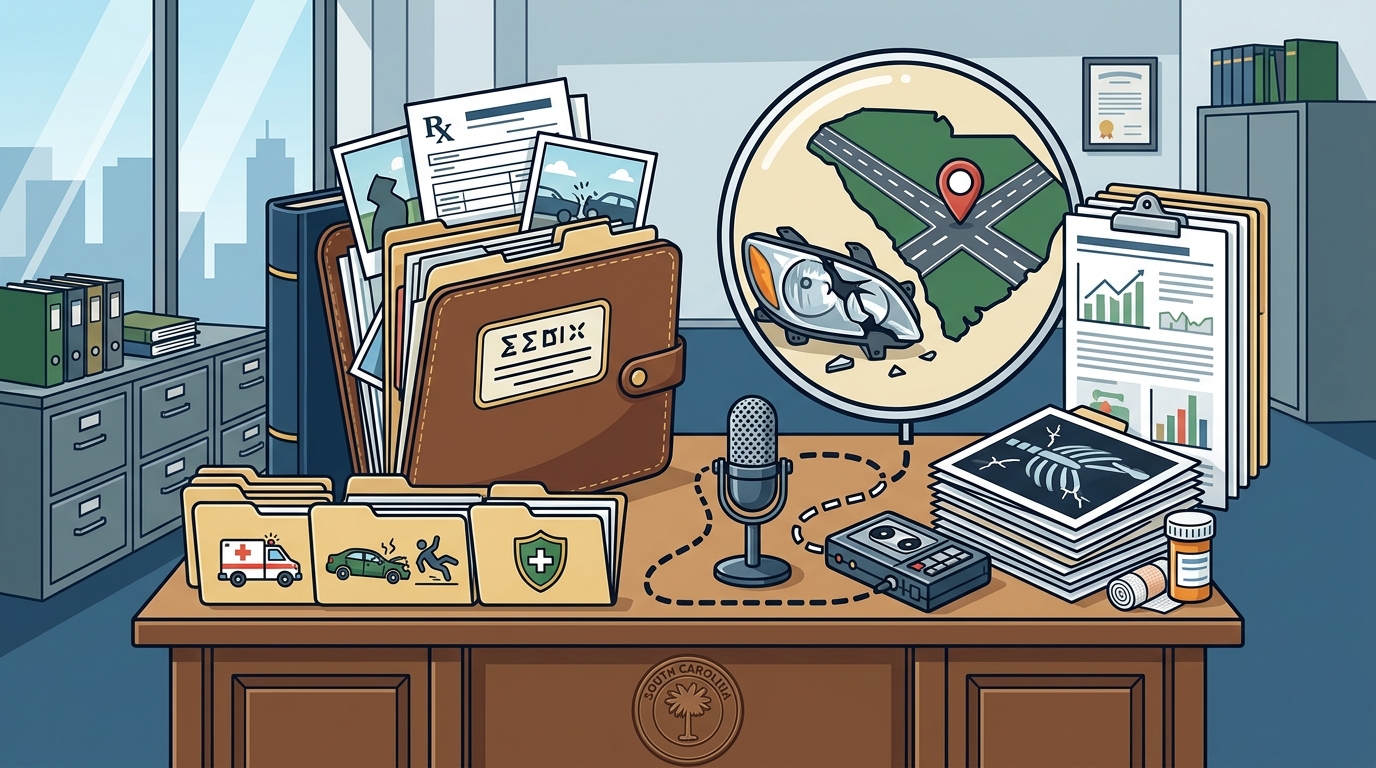
Immediate evidence preservation drastically strengthens your financial recovery. Photograph vehicle damage, road conditions, and visible injuries before moving vehicles. Request police reports and secure witness contact information at the scene.
Medical records serve as the primary financial foundation for your case. Seek professional evaluation within 24 hours, even if symptoms feel manageable. Delayed treatment creates exploitable gaps that insurers aggressively exploit.
Maintain a dedicated injury journal tracking daily pain levels and missed work hours. This documentation directly correlates with non-economic damage calculations. Consistent logging prevents future disputes regarding long-term recovery timelines.
Filing the Initial Insurance Claim
Contact the at-fault party’s carrier within 48 hours of the incident. Provide only factual statements without speculating on fault or injury severity. Adjusters record these initial conversations to establish baseline liability arguments.
Submit comprehensive medical bills, repair estimates, and lost wage verification simultaneously. Organize documents chronologically to streamline the adjuster review process. Missing paperwork frequently triggers unnecessary claim delays or denials.
Never accept the first settlement offer without independent financial review. Initial proposals rarely account for future medical procedures or permanent disability. You retain the right to reject unfavorable agreements and pursue alternative resolutions.
Navigating the South Carolina Statute of Limitations
State law imposes a strict three-year deadline for filing most injury lawsuits. This timeframe begins on the exact date your injuries occurred or were discovered. Missing this window permanently extinguishes your legal recovery options.
Government entity claims require accelerated notification procedures under state law. Administrative rules mandate you submit formal written notice within two years before initiating litigation. Failure to comply triggers automatic dismissal regardless of case merit.
Statutes of repose differ from standard deadlines by capping liability periods. These absolute cutoffs apply to construction defects and medical equipment failures. Consult experienced counsel to verify exact filing windows for specialized claims.
Engaging Legal Representation and Negotiation
Retaining qualified counsel transforms complex administrative processes into structured negotiations. Attorneys handle all correspondence, deposition scheduling, and expert witness coordination. This delegation allows injured parties to focus exclusively on medical recovery.
Discovery requests demand precise responses under oath and strict deadlines. Failure to comply triggers sanctions, case dismissal, or adverse inference rulings. Your legal team manages interrogatories, document production, and deposition preparation.
Settlement conferences occur before designated judges or independent mediators. Both parties present financial arguments and liability assessments to reach resolution. Successful negotiations typically eliminate lengthy trial schedules and associated expenses.
Preparing for Potential Court Litigation
Filing a formal complaint initiates the judicial process and establishes jurisdiction. Defendants receive 30 days to submit written answers or procedural motions. Ignoring these deadlines results in automatic default judgments against your case.
Expert witnesses provide specialized testimony regarding medical outcomes and economic losses. Economists calculate future earning capacity while physicians explain permanent impairment ratings. These professionals directly influence jury compensation decisions during trial proceedings.
Trial preparation requires exhaustive mock examinations and exhibit organization. Your legal team rehearses direct examinations and cross-examination rebuttals extensively. Comprehensive preparation significantly increases favorable verdict probabilities during jury selection.
Claim Resolution Options and Strategic Outcomes
| Resolution Pathway | Primary Advantage | Typical Timeline | Recommended Action |
|---|---|---|---|
| Direct Insurance Negotiation | Lowest administrative costs | 3 to 6 months | Review documentation guidelines |
| Mediated Settlement Conference | Neutral third-party facilitation | 6 to 12 months | Consult specialized counsel |
| Formal Court Litigation | Jury compensation authority | 12 to 24 months | Engage trial attorneys |
| Statutory Government Claim | Mandated administrative compliance | Variable statutory periods | Examine precedent outcomes |
Key Takeaways
- South Carolina enforces a strict three-year statute of limitations for standard injury lawsuits.
- Modified comparative negligence bars recovery if plaintiff fault reaches 51 percent or higher.
- Government entity claims require accelerated written notification within two years of the incident.
- Immediate medical documentation directly correlates with successful non-economic damage calculations.
- First insurance settlement offers rarely account for future medical procedures or permanent disability.
- Strict liability frameworks bypass traditional fault arguments for defective products and animal attacks.
Frequently Asked Questions
How long do I have to file a personal injury lawsuit in South Carolina?
State law imposes a strict three-year deadline for filing most injury lawsuits. This timeframe begins on the exact date your injuries occurred or were discovered. Missing this window permanently extinguishes your legal recovery options.
What happens if I am partially responsible for my accident?
South Carolina operates under a modified comparative negligence framework. This legal standard dictates that your compensation decreases proportionally based on your assigned fault percentage. You cannot recover damages if your responsibility reaches 51 percent or higher.
Do I need to hire an attorney to file an insurance claim?
While you can submit claims independently, insurance adjusters utilize recorded statements to minimize payout values. Qualified attorneys handle all correspondence, deposition scheduling, and expert witness coordination. This delegation allows injured parties to focus exclusively on medical recovery.
How are medical bills handled during the claims process?
Medical records serve as the primary financial foundation for your case. Seek professional evaluation within 24 hours, even if symptoms feel manageable. Delayed treatment creates exploitable gaps that insurers aggressively exploit.
What documents should I gather immediately after an accident?
Immediate evidence preservation drastically strengthens your financial recovery. Photograph vehicle damage, road conditions, and visible injuries before moving vehicles. Request police reports and secure witness contact information at the scene.
Can I sue a government entity for my injuries?
Government entity claims require accelerated notification procedures under state law. You must submit formal written notice within two years before initiating litigation. Failure to comply triggers automatic dismissal regardless of case merit.
How long does the settlement negotiation process typically take?
Direct insurance negotiations typically resolve within 3 to 6 months. Mediated conferences extend timelines to 6 to 12 months depending on complexity. Formal court litigation requires 12 to 24 months to reach final judgment.
Secure Your Legal Consultation Today
Filing a personal injury claim in South Carolina demands precise procedural execution and strategic financial planning. Our experienced team has successfully recovered over $10 million in record settlements for injured clients across the Lowcountry. Contact our Charleston office today to schedule your complimentary case evaluation. Visit our main practice portal to access comprehensive service details and schedule your consultation directly.