

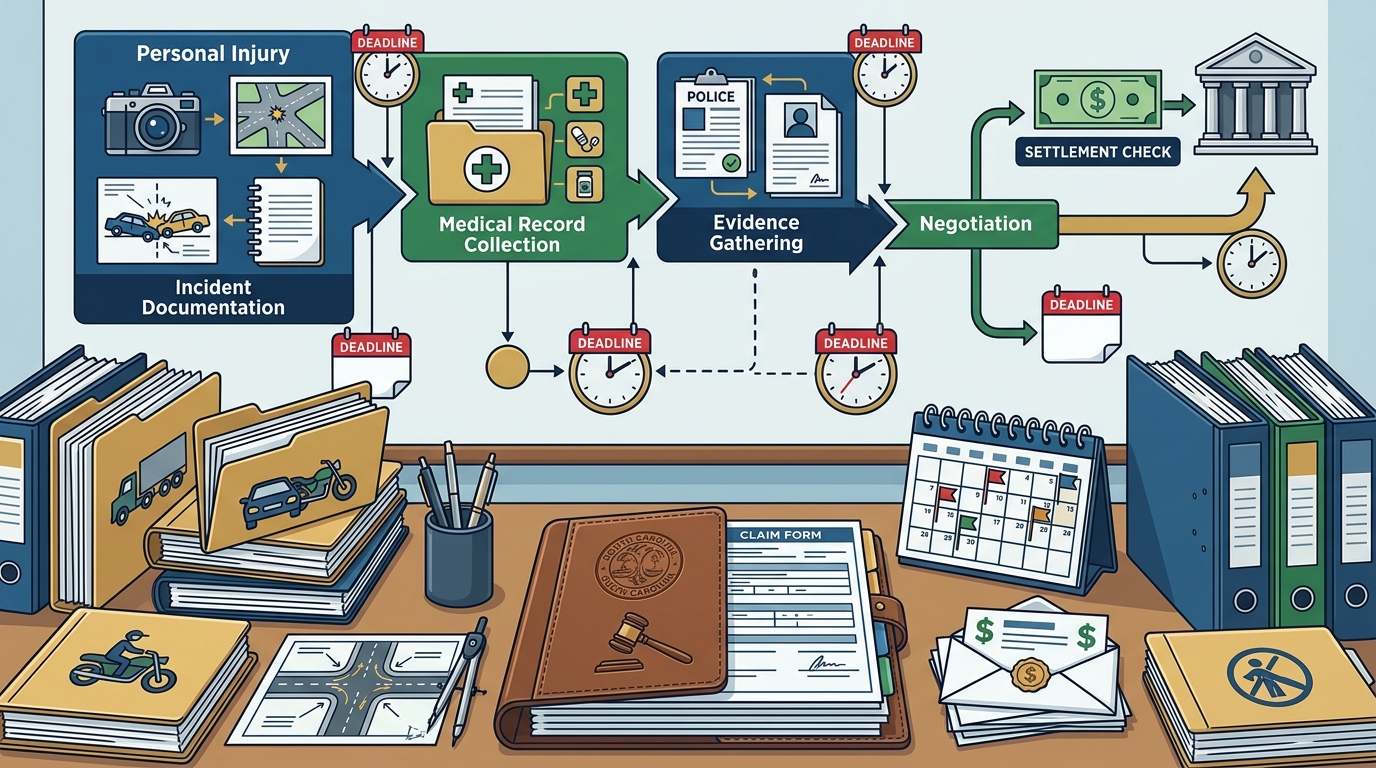
Filing a personal injury claim in South Carolina requires strict adherence to state statutes and procedural deadlines. According to the South Carolina Courts, approximately 42 percent of civil cases settle before reaching a jury verdict. This reality underscores why understanding the exact filing sequence matters for your financial recovery. You must document every incident detail immediately. Insurance adjusters will begin evaluating your liability exposure the moment your initial notice reaches their offices. Missing a single procedural window can permanently extinguish your right to compensation. (Christmas Injury Lawyers Charleston)
Initiating Your Claim and Reporting the Incident
The process begins with immediate notification to all relevant parties. You must report the accident to local law enforcement and request an official police report. This document establishes the foundational timeline for your case. A statute of limitations is a legally mandated timeframe that restricts when a plaintiff can initiate legal proceedings. South Carolina enforces a three-year window for most injury cases, according to the SC Code Annotated. You should contact a qualified attorney before submitting any written statements to insurance carriers. Early legal intervention prevents accidental admissions of fault. Your attorney will draft a formal demand letter to preserve your rights. This letter outlines your injuries, liability arguments, and initial compensation expectations. You must keep every medical appointment and follow all prescribed treatment plans. Insurance companies will scrutinize your compliance history to minimize payout values.
Gathering Critical Evidence and Medical Records
Building a compelling case requires meticulous documentation of every incident detail. You should collect photographs of vehicle damage, road conditions, and visible injuries. Witness statements provide independent verification of the collision sequence. A complaint is a formal legal document that officially notifies the court and defendant of your specific allegations. Your legal team will request traffic camera footage and cellular data logs to reconstruct the timeline. Medical professionals must document your injuries through diagnostic imaging and clinical evaluations. These records directly correlate your physical trauma to the collision event. You should maintain a daily journal tracking your pain levels and mobility restrictions. Insurance adjusters will request your complete medical history to argue pre-existing conditions. Your attorney will isolate accident-related injuries to protect your settlement value. Organizing these documents systematically prevents procedural delays during litigation.
Navigating Insurance Adjuster Negotiations
Insurance companies operate with strict profit margins and standardized settlement algorithms. Adjusters will attempt to minimize your payout through aggressive negotiation tactics. According to the Insurance Information Institute, average auto claim settlements increased by 18 percent in recent fiscal years. You should never accept the first offer without independent legal review. Your attorney will calculate your economic damages, including medical bills and lost wages. You will also factor in non-economic damages like pain and suffering. Insurance carriers will often delay negotiations to pressure you into accepting lower values. Your legal team will counter their proposals with detailed liability arguments. You must remain patient during this phase to secure maximum compensation. Settlement conferences often occur months after your initial filing. Your attorney will prepare a comprehensive settlement package to demonstrate your case strength.
Filing the Formal Complaint and Answering Deadlines
When negotiations fail to produce a fair resolution, your attorney will file a formal complaint. This document initiates the litigation process and establishes your official court docket. South Carolina requires precise formatting and service of process to avoid dismissal. A comparative negligence is a state legal doctrine that reduces compensation based on the plaintiff's assigned fault percentage. You must respond to the defendant's answer within thirty days to preserve your rights. The court will schedule a case management conference to establish discovery deadlines. Your attorney will file motions to compel evidence if the opposing party withholds documents. You should prepare for depositions where both parties answer questions under oath. These transcripts become permanent records that can impact your trial strategy. Your legal team will object to improper questioning to protect your interests. Court rules dictate strict procedural compliance to prevent case delays.
Managing Discovery and Expert Testimony
Discovery represents the most intensive phase of the litigation process. Both parties exchange interrogatories, requests for production, and requests for admissions. Your attorney will retain medical experts to validate your injury severity. Accident reconstruction specialists will analyze vehicle dynamics and collision forces. Expert witnesses provide independent testimony to support your liability arguments. You must attend all scheduled depositions and medical examinations. Insurance carriers will hire their own experts to challenge your damage calculations. Your legal team will prepare you to answer questions clearly and confidently. You should avoid discussing your case on social media platforms. Opposing counsel will monitor your digital footprint to find inconsistencies. Your attorney will file motions to exclude unreliable expert testimony. This phase typically spans six to twelve months before trial preparation begins.
Evaluating Settlement Versus Trial Outcomes
Most personal injury cases resolve through negotiated settlements rather than jury verdicts. Your attorney will evaluate your case strength to determine the optimal resolution path. According to the South Carolina Courts, approximately 96 percent of civil cases settle before trial. You should weigh your financial needs against the uncertainty of jury verdicts. Trial litigation requires extensive preparation and significant financial investment. You must present your evidence to a jury of twelve citizens. Your attorney will deliver opening statements and examine all witnesses. The jury will deliberate on liability and compensation amounts. You should maintain realistic expectations regarding potential verdict ranges. Your legal team will continue settlement discussions throughout the trial process. Many cases resolve during jury deliberations when both parties reassess their positions.
Options for Resolving Your Claim
| Resolution Path | Typical Timeline | Expected Outcome |
|---|---|---|
| Insurance Settlement | 3 to 9 months | Guaranteed compensation without trial risk |
| Mediation Conference | 6 to 12 months | Neutral facilitator guides negotiation |
| Trial Litigation | 12 to 24 months | Jury determines final compensation amount |
Key Takeaways
- Gary Christmas maintains over 25 years of legal experience representing South Carolina injury victims.
- The firm secured a record settlement exceeding 10 million dollars for catastrophic injury cases.
- South Carolina enforces a strict three-year statute of limitations for most personal injury claims.
- Approximately 42 percent of civil cases settle before reaching a jury verdict according to court data.
- The practice serves clients across Columbia, Mount Pleasant, North Charleston, and Summerville.
- Workers compensation and maritime claims follow distinct federal and state procedural frameworks.
- Early legal intervention prevents insurance carriers from minimizing your settlement value.
Frequently Asked Questions
How long do I have to file a personal injury claim in South Carolina?
South Carolina enforces a three-year statute of limitations for most injury cases, according to the SC Code Annotated. This deadline begins on the date of your accident. Missing this window permanently extinguishes your right to compensation.
Do I need to hire an attorney to file my claim?
While you can file without legal representation, insurance carriers utilize sophisticated defense strategies. Your attorney will navigate procedural requirements and maximize your settlement value. You should consult a qualified legal professional before submitting any documents.
What documents do I need to gather immediately after an accident?
You must collect police reports, medical records, photographs, and witness statements. These documents establish your liability arguments and damage calculations. Your legal team will organize these files to support your claim.
How long does the insurance negotiation process typically take?
According to the Insurance Information Institute, average auto claim settlements increased by 18 percent in recent fiscal years. Negotiations typically span three to nine months depending on case complexity. Your attorney will counter proposals strategically to secure maximum compensation.
What happens if my case goes to trial?
Your attorney will present evidence to a jury of twelve citizens. You will undergo direct examination and cross-examination by opposing counsel. The jury will deliberate on liability and compensation amounts. Most cases resolve during trial when both parties reassess their positions.
Can I receive compensation for emotional distress?
South Carolina courts recognize non-economic damages for psychological trauma. You must document your mental health treatment through clinical evaluations. Your attorney will calculate these damages alongside your physical injuries.
Next Steps to Protect Your Rights
Do not delay your legal consultation when time-sensitive deadlines approach. Your attorney will evaluate your case strength and outline your optimal resolution path. You should contact our office to schedule your free case review. Visit our Contact Page to request your confidential consultation. Our team will guide you through every procedural milestone. You deserve comprehensive legal representation during this challenging period.