

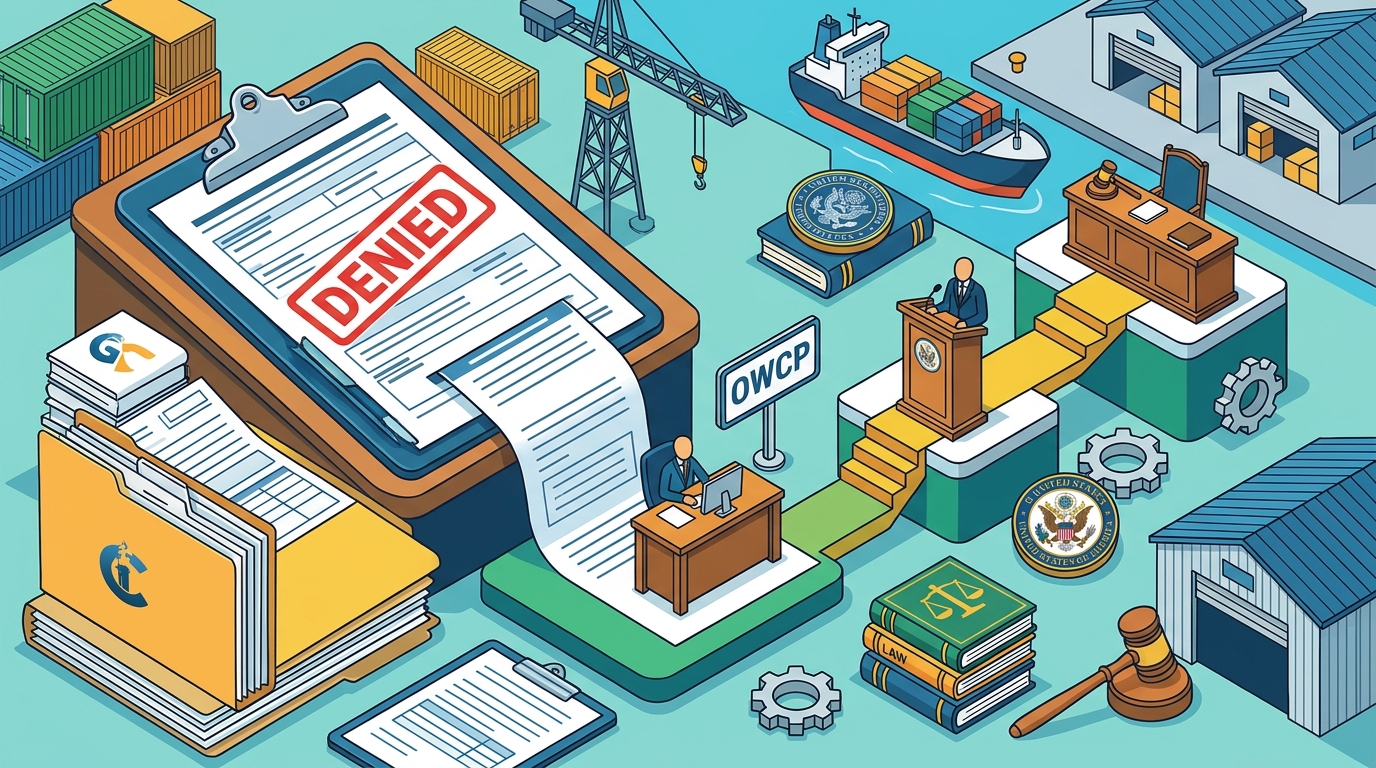
If your Longshore and Harbor Workers' Compensation Act (LHWCA) claim is denied or disputed by your employer or the carrier, you are not out of options. The federal system provides a structured, multi-tiered dispute resolution process that allows you to challenge the decision. You can request a review by the Office of Workers' Compensation Programs (OWCP) or file a petition for benefits with the Employees' Compensation Appeals Board (ECAB). Understanding these steps is critical to securing the medical and wage benefits you are owed.
Understanding the Denial
When a carrier denies a claim, they must provide a written notice explaining the specific reasons for the rejection. This document is the foundation of your dispute. A denial might be based on the carrier's belief that the injury did not occur on the job, that the condition is not compensable, or that the requested treatment is not medically necessary. Carrier denial is a formal administrative action that triggers your right to appeal. It is not the final word. Many denials are based on incomplete medical records or a misunderstanding of the facts. Your first step is to review the denial letter carefully. Identify the specific legal or factual grounds cited. This allows you to target your response effectively.
Requesting an OWCP Review
Appealing to the ECAB
If the OWCP examiner upholds the denial, you can appeal to the Employees' Compensation Appeals Board (ECAB). The ECAB is an independent federal agency that hears appeals from OWCP decisions. You must file your appeal within 30 days of the OWCP's final decision. The ECAB review is more formal than the OWCP review. It often involves a hearing where you or your attorney can present arguments and cross-examine witnesses. ECAB appeal is a quasi-judicial proceeding that provides a higher level of scrutiny. The Board reviews the record and may hold a hearing if necessary. Their decision is binding unless further appealed to the federal courts. This stage is where the legal arguments become most critical. The ECAB looks at the totality of the evidence and the application of federal law. It is a powerful tool for overturning incorrect denials.
The Role of Legal Representation
Navigating the LHWCA dispute process requires specialized knowledge of federal maritime and longshore law. While you can represent yourself, the complexity of the regulations often favors those with legal counsel. An experienced attorney can help you gather the right evidence, draft persuasive legal arguments, and represent you at hearings. At Christmas Injury Lawyers, our team includes attorneys with specific expertise in longshore and harbor workers' compensation cases. We understand the nuances of the LHWCA and the federal administrative process. Legal representation is a strategic advantage in dispute resolution. We can help you identify weaknesses in the carrier's case and build a strong counter-argument. Our firm serves clients across South Carolina, including in Charleston and the Lowcountry. We are dedicated to fighting for the rights of injured workers. If your claim is denied, do not give up. To discuss your options, contact our team.
Key Takeaways
- A carrier denial is not final; you have the right to appeal.
- You must file an OWCP review request within 30 days of the denial.
- The OWCP claims examiner will re-evaluate your case based on new evidence.
- If the OWCP upholds the denial, you can appeal to the ECAB within 30 days.
- The ECAB is an independent federal board that hears formal appeals.
- Working with an experienced LHWCA attorney significantly improves your chances of success.
- Keep all medical records and correspondence related to your injury.
Frequently Asked Questions
What is the deadline to appeal an LHWCA denial?
You must file a request for review with the OWCP within 30 days of receiving the denial notice. If the OWCP upholds the denial, you have another 30 days to appeal to the ECAB. Missing these deadlines can result in the loss of your right to appeal.
Can I go to court immediately after a denial?
No, you generally cannot go directly to federal court. You must first exhaust the administrative remedies by going through the OWCP and then the ECAB. Only after the ECAB issues a final decision can you appeal to the federal courts.
What evidence should I submit with my appeal?
You should submit any new medical records, doctor's opinions, or witness statements that were not considered in the initial review. Focus on evidence that directly addresses the reasons the carrier gave for denying your claim.
Does Christmas Injury Lawyers handle LHWCA disputes?
Yes, our firm has specific expertise in longshore and harbor workers' compensation cases. We represent injured workers in South Carolina and help them navigate the federal dispute resolution process.
What happens if the ECAB denies my appeal?
If the ECAB denies your appeal, you can file a petition for review in the United States Court of Appeals for the appropriate circuit. This is a higher level of legal review that focuses on legal errors rather than factual disputes.
Is it worth hiring a lawyer for a small claim?
Even for smaller claims, the complexity of the LHWCA process can make it difficult to navigate on your own. An attorney can help ensure you do not miss critical deadlines or fail to present your case effectively. Many firms, including ours, work on a contingency basis, meaning you do not pay unless we recover benefits for you.