
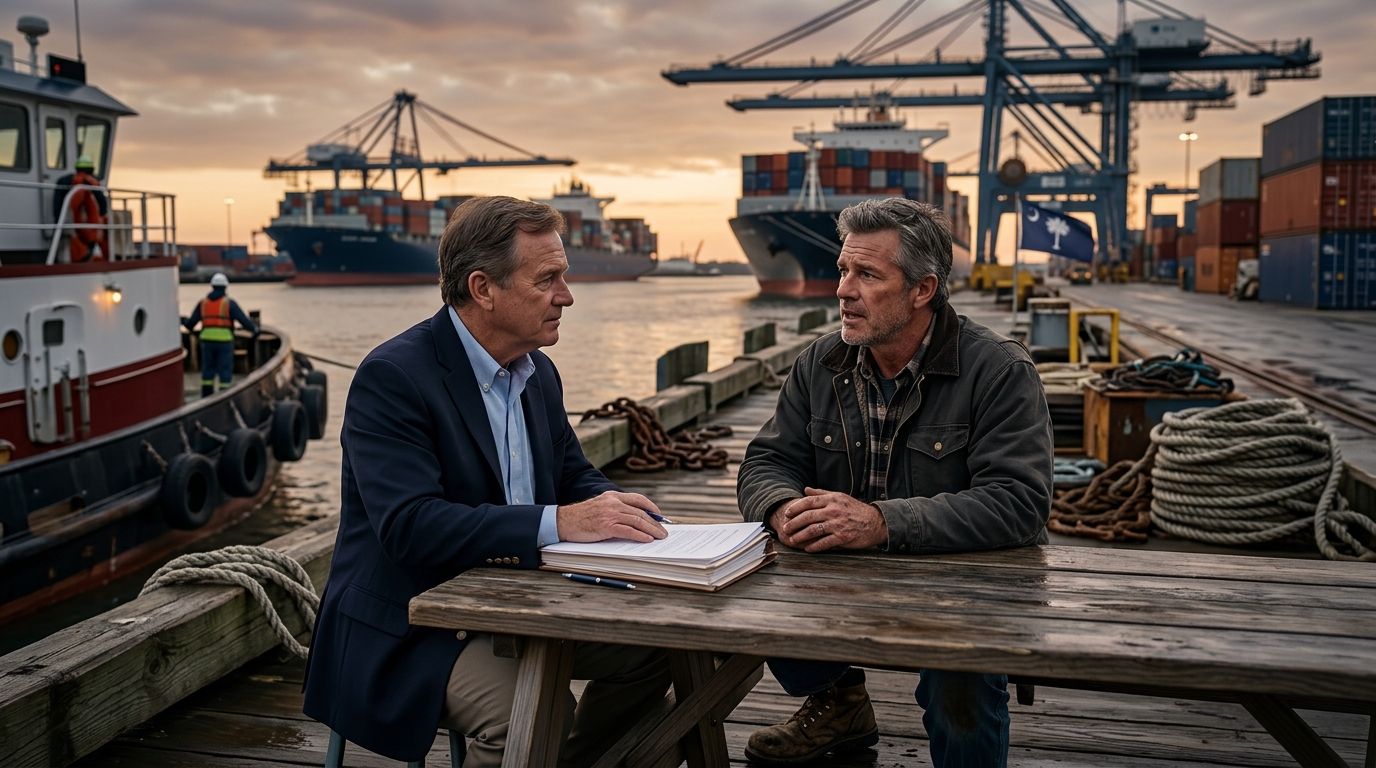
What is the process for filing a Jones Act Seamen claim for maritime injuries in South Carolina?
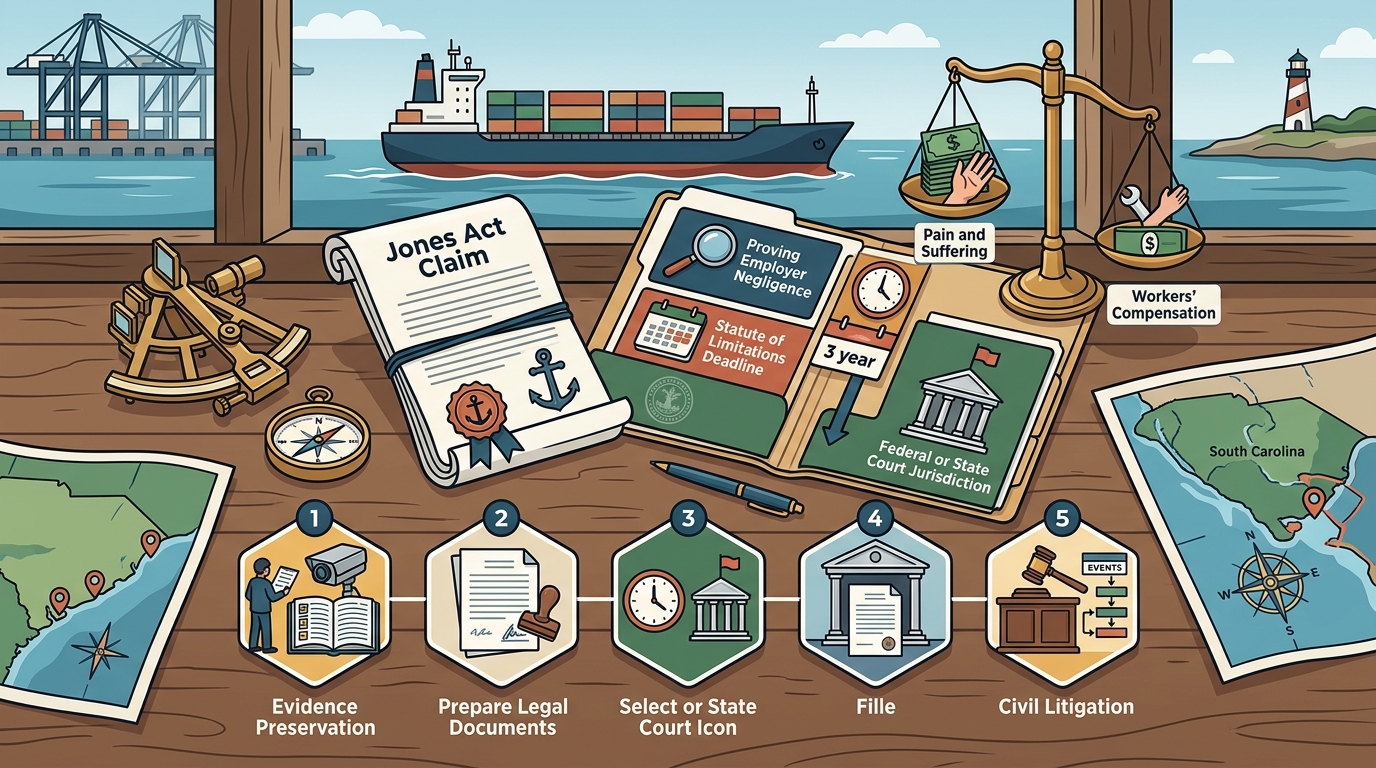
The process for filing a Jones Act Seamen claim in South Carolina involves proving employer negligence, meeting a three-year statute of limitations, and filing in federal or state court. Unlike standard workers' compensation, seamen can sue for full damages including pain and suffering. This guide covers the five critical steps: filing a negligence lawsuit, understanding deadlines, determining court jurisdiction, initiating civil litigation, and preserving evidence. At Christmas Injury Lawyers, we guide maritime workers through this complex federal and state legal landscape to secure the compensation they deserve.
Negligence Lawsuit Filing
The Jones Act is a federal statute that allows seamen to sue their employers for injuries caused by negligence. A seaman is defined as a person who spends at least 30% of their working time on a vessel in navigation. This distinction is critical because it moves the worker out of the standard workers' compensation system and into a tort-based legal framework. Under this act, the burden of proof is lower than in standard negligence cases. The seaman only needs to prove that the employer's negligence contributed in any part, no matter how small, to the injury.
Proving Employer Negligence
To win a Jones Act claim, you must establish that the employer failed to provide a reasonably safe workplace. This includes maintaining the vessel, providing proper training, and ensuring safe work methods. Common examples of negligence include broken equipment, inadequate safety gear, or unsafe working conditions. The employer has a duty to use ordinary care to ensure the vessel is seaworthy. If a crew member is injured due to a maintenance failure or a lack of supervision, that failure can form the basis of a negligence lawsuit.
Comparative Negligence
It is important to understand that the Jones Act applies a comparative negligence standard. If the seaman is found to be partially at fault for their own injury, their compensation is reduced by their percentage of fault. However, unlike some state laws, the Jones Act does not bar recovery if the seaman is 50% or more at fault. This makes it vital to document the specific actions of the employer that led to the accident. At Christmas Injury Lawyers, we focus on isolating the employer's specific failures to maximize the recovery for our clients.
Statute of Limitations
The statute of limitations is the legal deadline for filing a lawsuit. For Jones Act claims, the federal statute of limitations is three years from the date of the injury. This is a strict deadline. If you miss this window, you lose the right to sue for damages permanently. It is not a suggestion; it is a hard legal bar. Many maritime workers delay filing because they are still recovering or waiting for medical bills to settle. However, the clock starts ticking the moment the injury occurs, not when the treatment ends.
Why Time Matters
Time is also critical for evidence. As months pass, memories fade, witnesses move on, and physical evidence is altered or discarded. Filing a claim early preserves your legal rights and keeps the pressure on the insurance company. In South Carolina, maritime workers often face pressure to sign early releases. Understanding the three-year limit gives you leverage. You do not have to rush to settle, but you must file the lawsuit within the statutory period to keep your case alive.
Court Jurisdiction
Court jurisdiction determines where your case will be heard. Jones Act cases are federal matters, but they can be filed in either federal court or state court. This is known as concurrent jurisdiction. In South Carolina, you can file your Jones Act claim in the United States District Court for the District of South Carolina or in a state court with jurisdiction over the matter. The choice of forum can impact the speed of the case and the specific procedural rules that apply.
Federal vs. State Court
Federal courts often have more experience with maritime law and the Jones Act. They may have specialized judges who understand the nuances of seaman status and seaworthiness. State courts, on the other hand, may be more familiar with local employment practices and state-specific tort laws that might apply alongside the federal claim. The decision on where to file depends on the specific facts of your case. An experienced attorney can evaluate which forum offers the best strategic advantage for your recovery.
Civil Lawsuit Filing
Filing a civil lawsuit is the formal step that initiates the legal process. This involves drafting and serving a complaint on the employer. The complaint outlines the facts of the accident, the legal theories of negligence, and the damages you are seeking. Once the complaint is filed, the employer must respond within a set period, usually 20 to 30 days. This response, called an answer, admits or denies the allegations. After this, the case enters the discovery phase, where both sides exchange information and evidence.
The Discovery Phase
Discovery is where the case is built. You will be deposed, meaning you will answer questions under oath. You will also request documents from the employer, such as maintenance logs, training records, and incident reports. The employer will do the same to you. This phase is crucial for establishing the timeline and the cause of the injury. It is also where settlement negotiations often begin. Many cases settle during discovery because both sides have a clearer picture of the liability and damages.
Settlement vs. Trial
Most Jones Act cases settle before trial. A settlement is an agreement to resolve the case for a specific amount of money. It avoids the cost and uncertainty of a trial. However, if a fair settlement cannot be reached, the case goes to trial. In a trial, a judge or jury will decide the outcome. The jury will determine the percentage of fault and the amount of damages. A trial is a high-stakes event, and having an experienced attorney is essential to present your case effectively.
Evidence Preservation
Evidence preservation is the process of securing and maintaining proof of the accident and its cause. In maritime cases, evidence can be fragile. Vessels are constantly moving, and conditions change. Physical evidence, such as a broken railing or a wet deck, may be repaired or cleaned up quickly. Digital evidence, such as maintenance logs or communication records, can be overwritten or deleted. Preserving this evidence is critical to proving negligence.
Documenting the Scene
Legal Hold Notices
Once a lawsuit is filed or anticipated, the employer is legally required to preserve all relevant evidence. This is known as a legal hold. If the employer destroys evidence after a legal hold is issued, they can be sanctioned by the court. This can include adverse inference instructions, where the jury is told to assume the destroyed evidence was unfavorable to the employer. At Christmas Injury Lawyers, we ensure that all potential evidence is identified and preserved to protect your rights.
Key Takeaways
- The Jones Act allows seamen to sue for negligence, unlike standard workers' compensation.
- You have three years from the date of injury to file a lawsuit.
- Cases can be filed in either federal or state court in South Carolina.
- The burden of proof is lower; you only need to show the employer's negligence contributed in any part.
- Evidence preservation is critical; document the scene and secure digital records early.
- Comparative negligence applies, so your fault percentage will reduce your damages.
- Most cases settle during the discovery phase, but trial is an option.
- Consulting an experienced maritime attorney early is essential for a successful claim.
Frequently Asked Questions
What is the difference between the Jones Act and workers' compensation?
The Jones Act is a federal law that allows seamen to sue their employers for negligence. Workers' compensation is a state system that provides no-fault benefits but limits the types of damages you can recover. Under the Jones Act, you can recover for pain and suffering, which is not available in workers' compensation.
How long do I have to file a Jones Act claim?
You have three years from the date of the injury to file a lawsuit. This is a strict federal deadline. If you miss it, you lose your right to sue.
Can I file a Jones Act claim in South Carolina state court?
Yes. Jones Act cases have concurrent jurisdiction, meaning they can be filed in either federal or state court. The choice depends on the specific facts of your case.
What counts as a seaman under the Jones Act?
A seaman is a person who spends at least 30% of their working time on a vessel in navigation. This includes deckhands, engineers, and other crew members who work primarily on the vessel.
Do I need a lawyer to file a Jones Act claim?
While you can file a claim yourself, it is highly recommended to hire an experienced maritime attorney. The Jones Act is a complex area of law with specific procedural requirements. An attorney can help you navigate the process and maximize your recovery.
What damages can I recover under the Jones Act?
You can recover for medical expenses, lost wages, pain and suffering, mental anguish, and loss of earning capacity. The amount depends on the severity of your injury and the degree of the employer's negligence.
Conclusion
Filing a Jones Act Seamen claim in South Carolina is a complex process that requires a deep understanding of federal maritime law. From proving negligence to meeting strict deadlines and preserving evidence, every step is critical to your recovery. At Christmas Injury Lawyers, we have the experience and expertise to guide you through this process. We fight for the rights of maritime workers and ensure they receive the full compensation they are entitled to. If you have been injured at sea, do not wait. Contact us today to schedule a consultation and learn how we can help you secure your future.